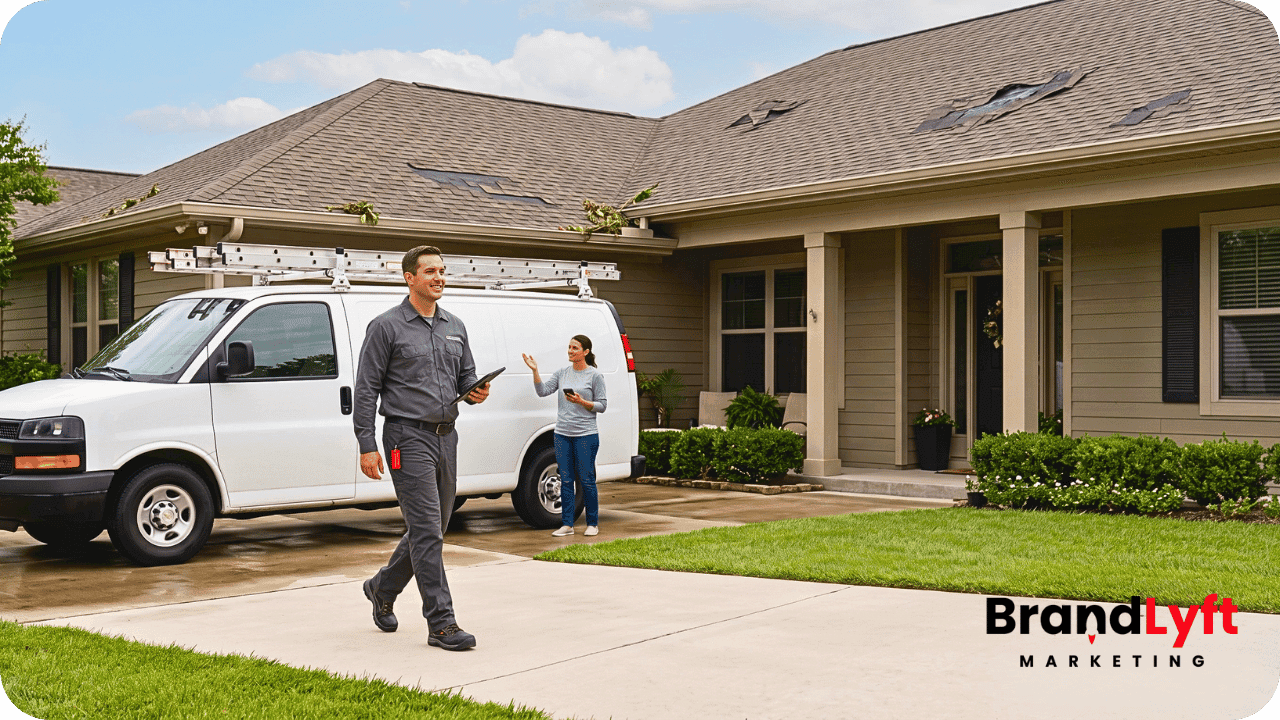
A homeowner notices storm damage, finds a roofing company online, and submits a quote request. The company already paid to generate that inquiry, but nobody clearly owns it. No confirmation reaches the homeowner. The request sits in an inbox until someone remembers to call.
By then, another roofer may already have the inspection booked.
Roofing lead follow-up is the path between a new inquiry and a real inspection appointment. Getting the lead is only the first step. The roofing company still has to acknowledge the request, assign an owner, collect the right details, offer an inspection, and keep following up until the homeowner books, declines, or does not qualify.
More roofing leads will not fix that path.
They will put more pressure on it.
Why Roofing Lead Follow-Up Breaks Before Inspection Booking
Most roofing quote requests do not disappear because the homeowner suddenly stopped caring about a leak, missing shingles, storm damage, or an aging roof.
They disappear because the business side becomes unclear.
A website form sends an email, but it never creates a task. A missed call appears in the call log, but nobody sends a text. The CRM assigns the lead to someone who is unavailable. Sales assumes the office called. The office assumes a salesperson already took it.
The contact technically exists.
The next action does not.
Common roofing follow-up gaps include:
- Website forms that only send an email notification
- Missed calls with no useful text response or call-back task
- Leads routed to the wrong office, salesperson, or service area
- No confirmation telling the homeowner what happens next
- Quote requests sitting outside the sales pipeline
- Sales staff assuming someone else already followed up
- No recovery path when the homeowner does not answer
BrandLyft’s Speed to Lead work connects directly to this problem. Fast response is useful, but only when the message leads to clear ownership and a real inspection path.
What Roofing Lead Follow-Up Should Do as Soon as a Lead Comes In
A new roofing lead needs a small set of actions to happen in the right order.
The system should first acknowledge the homeowner. That message confirms that the request arrived and explains what will happen next.
Next, the business should record the original lead source. A quote request from Google Ads, Local Services Ads, organic search, Facebook, a referral, or a roofing landing page should not enter the CRM as the same vague “website lead.”
The right person then needs an alert and ownership of the next action. That may be an office manager, dispatcher, salesperson, inspector, or location-specific team member.
The lead should also enter the roofing pipeline as an opportunity. A contact record alone does not show whether anyone called, qualified, or offered an inspection.
HighLevel’s workflow documentation explains how a form submission can trigger actions such as sending a confirmation, creating internal notifications, and starting follow-up. The roofing company still has to decide who owns those actions and what each one means.
BrandLyft’s Revenue System Build fits when forms, calls, assignments, calendars, and pipelines need to work as one roofing sales path instead of separate tools.
What the First Roofing Confirmation Should Say
The first message should sound helpful, not automated for the sake of automation.
It should confirm receipt, name the roofing request, and tell the homeowner what happens next.
Example: Hi , we received your roofing request for . Someone from will contact you to confirm the project details and available inspection times.
That message does not need to sell the roof.
It needs to remove uncertainty.
A homeowner dealing with active damage may also need a clearer expectation around emergency availability. A replacement inquiry may need a normal inspection route. An insurance-related request may need someone to confirm storm date, claim status, or the next inspection step.
The message should match the service path without asking the homeowner to explain everything again.
Qualify the Roofing Lead Without Adding Friction
Roofing qualification should collect enough information to route the request without turning the form or first call into an interrogation.
The company usually needs:
- Property address and service area
- Repair, replacement, inspection, maintenance, or emergency need
- Residential or commercial property
- Insurance-related or retail project
- Preferred inspection time
- Best phone number and contact method
Those details help the team decide who should handle the lead and how quickly the situation needs attention.
An emergency leak may need a different path than a planned roof replacement. A commercial project may need a different salesperson from a residential inspection. An address outside the service area should not sit in the same queue as a qualified local homeowner.
Ask only for details the team will actually use.
If the form collects fifteen fields but sales still asks every question again, the process creates more work without improving the handoff.
Route Roofing Leads by Area, Urgency, and Project Type
One roofing workflow should not blindly treat every inquiry the same.
The routing path may need to consider service area, project type, emergency status, residential or commercial work, insurance involvement, assigned salesperson, and inspector availability.
This does not mean every roofing company needs complicated automation.
A smaller roofer may route every qualified lead to one office manager. A larger operation may need territory rules, separate sales teams, storm-response assignments, or location-based calendars.
The important part is that the lead reaches someone who can act.
BrandLyft’s roofing industry page explains the broader relationship between lead generation, CRM follow-up, and booked roofing work. This article focuses on the tighter operating path that begins after the homeowner raises a hand. Review the broader roofing marketing system when the problem also includes lead volume, ads, local SEO, or wider campaign performance.
Move Qualified Roofing Leads Into Inspection Booking
Qualification should lead somewhere.
Once the company confirms that the property, service area, and project type fit, the next step should be an inspection offer.
The calendar needs to reflect real inspector availability. It may also need service-area rules, appointment buffers, travel time, project type, and limits on how many inspections one person can take.
The homeowner should receive a confirmation after booking. Reminders should make the appointment easier to keep. Rescheduling should not force the homeowner to restart the process.
HighLevel’s customer-booked appointment trigger can start actions after someone schedules. A roofing company might use that event to notify the assigned inspector, update the opportunity, send appointment details, or stop the pre-booking follow-up.
The harder case is the homeowner who qualifies but does not choose a time.
That lead should not remain trapped between “interested” and “booked.” The system needs a clear follow-up stage, an owner, and a task to help the homeowner finish scheduling.

Before You Buy More Roofing Leads
Check Where the Quote-to-Inspection Path Is Breaking
Use the GHL Rescue Decision Guide to check lead capture, ownership, follow-up, calendars, and reporting before more roofing quote requests enter the same setup.
The first-response path also needs work? Review Speed to Lead.
Give Every Roofing Lead One Clear Owner
Pipeline stages do not matter when nobody owns the next action.
Each roofing lead needs one current owner. Other people may help with scheduling, inspection, estimating, or production, but the CRM should show who carries the lead right now.
A focused quote-to-inspection pipeline could use stages like:
- New Quote Request
- First Response Sent
- Contact Attempted
- Qualified
- Inspection Offered
- Inspection Scheduled
- Reschedule or No-Show
- Unqualified
Each stage needs a plain meaning.
“First Response Sent” might mean the homeowner received the confirmation and the assigned person has a call task. “Qualified” might mean the address, service area, project type, and contact details fit. “Inspection Offered” should mean someone gave the homeowner a real scheduling option.
HighLevel’s guide to pipelines and opportunity stages explains how stages organize opportunities. Roofing teams still need their own definitions so the pipeline reflects actual work instead of vague labels.
BrandLyft’s article on HighLevel for roofing businesses covers the wider platform value. The more specific requirement here is simpler: one lead, one owner, one next action.
Build Follow-Up for Homeowners Who Do Not Reply
Many roofing leads will not answer the first call.
The homeowner may be at work, talking to an insurance company, dealing with interior damage, comparing roofers, or waiting for another family member.
One failed call attempt should not end the process.
A practical roofing lead follow-up sequence can mix calls, texts, and email without sending the same pressure message repeatedly.
The first follow-up should remind the homeowner why the company is contacting them. Later messages can offer the inspection again, ask one useful qualification question, or make rescheduling easier.
Example: Hi , following up on your roofing request for . We can help confirm the project details and available inspection times. Is this for a repair, replacement, or storm-damage inspection?
A missed inbound call needs its own recovery path. HighLevel’s missed-call text-back documentation explains how the account can send a message after an unanswered call.
The text does not replace the salesperson or office team.
Someone still needs to own the reply.
Follow-up also needs stop conditions. Messages should end when the homeowner replies, books an inspection, declines, falls outside the service area, requests no further contact, or becomes unqualified.
Without those conditions, automation creates noise and makes the roofing company look disconnected.
Track Quote Requests Through Booked Inspections
Lead volume alone does not tell a roofing owner if the follow-up path works.
The owner should be able to see:
- New quote requests by source
- Leads that received a first response
- Leads assigned to a real owner
- Qualified roofing opportunities
- Inspections offered
- Inspections booked
- Inspection show rate
- Leads with no recorded next action
That view helps separate marketing problems from follow-up problems.
A source may generate plenty of roofing leads while the office books very few inspections. Another source may produce fewer inquiries but stronger inspection rates. Without clean ownership and stage movement, the business cannot make that comparison.
HighLevel also documents how teams can use workflows for tasks such as assigning leads, scheduling appointments, and updating opportunity statuses. The account still needs stage rules that match the roofing process instead of moving leads merely because an automated message fired.
What Happens After the Roof Inspection?
The booked inspection completes this article’s page job.
After the inspection, the opportunity should move into the roofing company’s estimate and sales process. That next path may include measurement, scope review, insurance documentation, estimate preparation, presentation, financing, decision follow-up, contract signing, and production handoff.
Insurance, retail replacement, repair, maintenance, and commercial roofing projects may need different post-inspection stages.
Do not force all of them into one generic follow-up sequence.
A separate article should cover what happens after the estimate reaches the homeowner. Mixing that problem into this page would make both paths harder to explain.
When Roofing Lead Follow-Up Needs More Than Another Workflow
Sometimes the company does not have one broken follow-up message.
It has several disconnected systems.
The website form was built by one person. Another person built the calendar. Sales created the pipeline. The office handles calls in a different tool. Notifications go to old users. Reporting counts automated messages as response. Nobody can clearly trace a quote request from source to inspection.
Adding another workflow may hide the problem for a while.
It will not fix the operating path.
BrandLyft’s article on costly GoHighLevel setup mistakes explains how forms, workflows, pipelines, calendars, and ownership break when teams build them separately. BrandLyft’s GoHighLevel Partner service fits when the roofing account needs a wider review rather than another isolated automation.
A wider review should trace one real roofing lead through the entire path:
- Where the inquiry entered
- Which source appeared
- Who received the alert
- Who owned the first action
- What confirmation reached the homeowner
- How qualification happened
- Which calendar offered the inspection
- Where the opportunity moved
- What happened after no reply
- What the owner could see in reporting
That test usually reveals more than reviewing the workflow list alone.
Fix the Quote-to-Inspection Path Before Buying More Leads
A roofing quote request is not a booked inspection.
The homeowner still needs a clear response, a useful qualification path, the right salesperson or office owner, an inspection option, and follow-up that ends at the right time.
If quote requests keep going cold, the roofing company may not need more leads yet.
It may need a cleaner path for the leads it already receives.
Bring Us the Lead Path
Get a Second Set of Eyes on Your Roofing Follow-Up
If quote requests are coming in but booked inspections stay inconsistent, the problem may sit between the form, the calendar, and the sales handoff.
Prefer to check the account first? Start the free teardown.