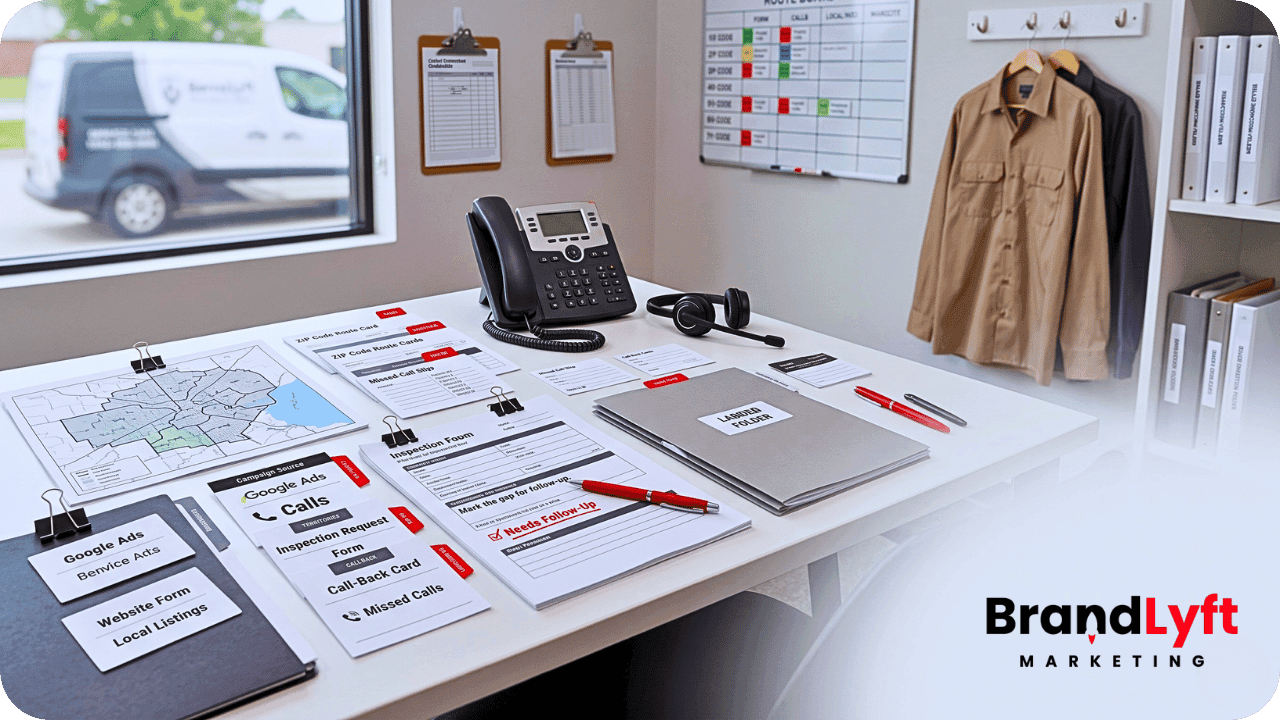

GoHighLevel Multi-Location Setup Checklist: What to Fix Before You Add More Locations
A GoHighLevel multi-location setup should not expand until the current locations can capture leads, route them, follow up, report, and use the system consistently.
That sounds obvious, but this is where many franchise and multi-location teams get into trouble.
The first few locations go live. Workflows exist. Pipelines exist. Calendars exist. Local teams have access. Corporate can see some activity. On the surface, the account looks ready for the next wave.
Then more locations get added, and the weak spots spread.
Lead capture gets inconsistent. Routing rules do not match real service areas. Missed calls sit too long. Pipeline stages mean different things by location. Reporting looks active but not useful. Local teams use GHL differently. Integrations create duplicate records. Corporate and local teams both assume the other side owns the handoff.
That is why a GoHighLevel multi-location setup needs a cleanup checklist before the next location gets added.
The goal is not to make the account more complicated.
The goal is to stop weak setup decisions from getting copied across the franchise.
If one location has messy routing, five more locations will not fix it. If the pipeline already feels unclear, adding more users will make it harder to trust. If corporate cannot see what each team does with every lead, more dashboards may only create more noise.
Before you add more locations, fix the system you already have.
Check the Setup Before You Copy It Wider
The Franchise GHL Optimization Map helps franchise and multi-location teams review lead capture, booking, routing, follow-up, reporting, integrations, and location handoff before more locations inherit the same gaps.
Why a GoHighLevel Multi-Location Setup Needs a Checklist Before Expansion
A GoHighLevel multi-location setup gets harder to fix after more branches, users, campaigns, and local workflows enter the account.
Early setup gaps are easier to ignore when only a few locations use the system.
A manager can manually reassign a lead. Corporate can ask one location for an update. Someone can fix a bad pipeline stage by hand. A missed call can get handled with a quick text from a local phone.
That kind of manual cleanup does not scale.
Once the franchise adds more locations, every unclear rule creates more drag. The team has more records to review, more staff to train, more dashboards to explain, more workflow branches to test, and more exceptions to track.
This is why the checklist matters.
It gives leadership a practical way to review the account before more locations get added. It also helps separate small cleanup from deeper rebuild work.
BrandLyft’s earlier article on GoHighLevel multi-location setup explains why deployments stall. This checklist focuses on what to fix before the next expansion step.
Checklist Item 1: Clean Up Lead Capture Before Adding More Locations
Lead capture is the first place to check.
Every location should receive leads from clean, trackable entry points. That may include website forms, local landing pages, paid ads, calls, missed calls, chat widgets, booking pages, referral forms, lead magnets, or third-party sources.
The problem starts when those sources enter GHL differently.
One form may capture location correctly. Another may miss the service area. A paid campaign may pass campaign data but not location data. A missed call may create a contact without enough context. A local landing page may skip the fields corporate needs for reporting.
That creates bad follow-up later.
Before more locations go live, review every lead source and ask:
- Does the lead enter the right GHL account or location structure?
- Does the form collect enough information to route the lead?
- Does source tracking stay attached to the contact?
- Does the lead create the right opportunity?
- Does the right location receive the alert?
- Can corporate report on the lead source later?
If the answer is unclear, fix lead capture first.
A weak form setup or messy call source will not improve when more locations copy it. It will only create more contacts that no one can trust.
Checklist Item 2: Fix Location Routing Before More Leads Hit the Account
Routing is the second checkpoint.
A lead entering GHL is not enough. The system has to know which location owns it, who should respond, and what happens if the first owner does not act.
Franchise routing often gets messy because real territories are not simple.
Some teams route by ZIP code. Others route by nearest branch, city, region, service area, owner group, appointment type, staff availability, or local capacity. Some leads sit between two locations. Some leads come from corporate campaigns with incomplete location data.
If the routing rule is loose, the local team has to guess.
That guesswork becomes more expensive as the franchise grows.
Before expanding your GoHighLevel multi-location setup, test lead routing across real lead paths. Submit a lead from a corporate page, a local page, a paid ad, a missed call, a referral source, and a booking request. Then check where each lead lands.
The right test is not “Did the workflow fire?”
The right test is “Did the correct location get a lead it can actually work?”
BrandLyft’s article on GoHighLevel lead routing for franchises goes deeper on this handoff. For this checklist, the point is simple: do not add locations until routing rules match how the franchise really operates.
Checklist Item 3: Review Missed-Call Follow-Up by Location
Missed calls can leak revenue quietly.
A buyer may not fill out a form or wait for a nurture sequence. They may call the nearest location, expect a quick answer, and move on if nobody responds.
For a multi-location brand, missed-call recovery needs more than one generic text.
The system should show which location missed the call, who should call back, how fast the follow-up happened, and what happened after that. It should also help corporate spot patterns.
One branch may miss calls during lunch. Another may miss them after 5 p.m. A third may miss weekend calls. A fourth may reply quickly but never update the pipeline.
Those are different problems.
Before adding more locations, check the missed-call path:
- Does a missed call trigger a text quickly?
- Does the right location get the callback task?
- Does a manager see missed calls that sit too long?
- Does the missed call create or update the right opportunity?
- Does reporting show missed calls by location?
- Does the workflow stop once the lead books or gets handled?
Speed matters, but ownership matters more.
BrandLyft’s article on speed-to-lead automation for franchises is the natural next read for teams that need a stronger first-response and missed-call recovery path.
Checklist Item 4: Standardize Pipeline Stages Before the Next Rollout
Pipeline stages should mean the same thing across every location.
This sounds basic, but it breaks often.
One location may move a lead to “Contacted” after an automated text. Another may wait until a live phone call happens. Another may skip the stage entirely. A manager may close opportunities differently from a sales rep. A front desk team may book appointments but never move the opportunity.
When that happens, reporting starts losing trust.
Before more locations join the system, define what each pipeline stage means. Then check whether local teams can follow that definition during real work.
A useful pipeline review should ask:
- Which stages are required for every location?
- Which stages are optional by service line or offer?
- What exact action moves a lead from one stage to the next?
- Who moves the opportunity?
- What stages trigger automation?
- What stages should show up in owner-level reporting?
HighLevel’s documentation on understanding pipelines explains how pipelines organize opportunities and stages. For franchise teams, the bigger job is making those stages mean the same thing across the brand.
If stages are unclear now, more locations will not make them clearer.
Checklist Item 5: Check Calendar and Booking Rules by Location
Calendar setup can look finished before it works in real life.
A location may have a calendar in GHL, but that does not mean the booking path matches the branch’s hours, staff, service types, appointment length, or availability.
Booking problems show up fast when a franchise expands.
A lead may route to one location but receive another location’s calendar. A buyer may book a service the branch does not offer. A same-day request may go to a team that cannot handle it. A local staff member may receive a booking without enough context.
Before adding more locations, test booking paths by location.
Check the form, workflow, calendar link, confirmation message, reminder, no-show path, and reporting view. The whole path should match the local operating model.
HighLevel’s calendars and appointments resources cover the platform mechanics. Franchise teams still need to decide how each branch should book, confirm, reschedule, and follow up.
A clean GoHighLevel multi-location setup should not send every buyer into one generic booking path.
Checklist Item 6: Fix Reporting Visibility Before Leadership Loses Trust
Reporting is one of the clearest signs that a setup is not ready to scale.
Owners should not have to chase managers for basic answers.
Which location responded fastest? Which one missed calls? Which one booked the most leads? Which pipeline stages stall? Which team follows up after no answer? Which locations actually use GHL?
If the account cannot answer those questions, the reporting layer needs work before more locations get added.
Bad reporting usually starts with bad inputs.
If lead sources are inconsistent, location routing is unclear, pipeline stages mean different things, and local teams work outside the CRM, dashboards will not solve the trust problem. They will only make the inconsistency easier to see.
Before expansion, review:
- Lead response by location
- Booked vs. unbooked leads
- Missed calls and callback status
- Pipeline movement by branch
- Overdue tasks
- Stale opportunities
- Local team activity
- CRM adoption by location
HighLevel’s dashboard permissions documentation shows how access can be controlled by role or user. For multi-location teams, permissions should match the reporting model so corporate, regional managers, and local teams see the right level of data.
BrandLyft’s article on GoHighLevel reporting for multi-location brands breaks down what owners need to see across every location.
Checklist Item 7: Review User Roles, Permissions, and Assigned Data
User access is not just an admin detail.
In a franchise GHL setup, access design affects daily work.
Local reps need to see the leads and tasks they own. Managers need enough visibility to coach and catch missed follow-up. Regional leaders may need a group of locations. Corporate needs cross-location reporting without getting buried in local noise.
If permissions are too loose, teams see too much. If they are too tight, people miss the context needed to act.
Before adding more locations, check user roles and assigned data.
Review who can see contacts, conversations, opportunities, workflows, calendars, dashboards, and pipeline records. Then check whether that access matches how the franchise actually works.
HighLevel’s support docs on user roles, permissions, and assigned data explain how sub-account access can restrict visibility and control tools such as workflows.
That matters before expansion because every new location adds more users, more records, and more permission decisions.
Do not wait until the account is full of confused users before cleaning access rules.
Checklist Item 8: Check Team Usage Before Training More Locations
Training more locations does not fix a system that current teams do not use correctly.
Before the next rollout, look at how active locations actually work inside GHL.
Do they call from the system? Do they reply inside conversations? Do they move opportunities? Do they complete tasks? Do they leave notes? Do they update appointment outcomes? Do they handle no-answer follow-up inside the CRM?
If one location uses GHL daily and another treats it as a notification tool, expansion will widen the gap.
This is where corporate teams often misread the problem.
They assume the issue is training. Sometimes it is. Other times, the workflow does not match daily work. The pipeline has too many stages. The booking path is confusing. The reporting view does not help local managers. The team does not know which system owns the next action.
BrandLyft’s article on GoHighLevel for franchises and location usage covers this adoption problem in more depth.
For this checklist, the rule is simple: do not train more locations on a process your current locations do not follow.
Checklist Item 9: Clean Up Integrations Before They Create More Duplicate Work
Many franchise teams use GHL alongside other systems.
A booking platform may hold appointments. A job system may hold service outcomes. A membership platform may hold customer status. An ad platform may hold campaign data. A custom database may hold location records.
That is not automatically a problem.
The problem starts when no one defines which system owns which part of the handoff.
Before adding more locations, review how GHL connects with other tools. Look for duplicate contacts, missing location IDs, broken booking status updates, unclear job outcomes, stale membership data, and reporting gaps.
HighLevel’s inbound webhook workflow trigger can receive data from outside applications into workflows. Its webhook and API options can support integration paths, but the franchise still needs business rules before the connection is useful.
BrandLyft’s article on GoHighLevel integrations for franchise brands explains why integrations should protect the handoff, not just move data between tools.
A weak integration copied to more locations becomes harder to unwind later.
Checklist Item 10: Clarify the Corporate-to-Local Handoff
A GoHighLevel multi-location setup needs a clear handoff between corporate and local teams.
Corporate may own campaigns, templates, dashboards, brand standards, reporting, and system rules. Local teams usually own calls, replies, bookings, notes, show-up handling, and real customer conversations.
Both sides need to know where their responsibility starts and ends.
Without that clarity, leads get stuck between teams.
Corporate assumes the location is working the lead. The location assumes the workflow handled it. A manager assumes the rep responded. The rep assumes the buyer booked. The dashboard shows activity, but no one owns the outcome.
Before adding more locations, document the handoff in plain language.
Who owns new leads? Who owns first response? Who owns missed calls? Who owns bookings? Who owns no-shows? Who owns stale opportunities? Who reviews local reporting? Who fixes workflow issues? Who decides when a location is ready to go live?
BrandLyft’s article on GoHighLevel for franchises deployment is useful here because deployment needs shared structure and location-level ownership, not just another copied setup.
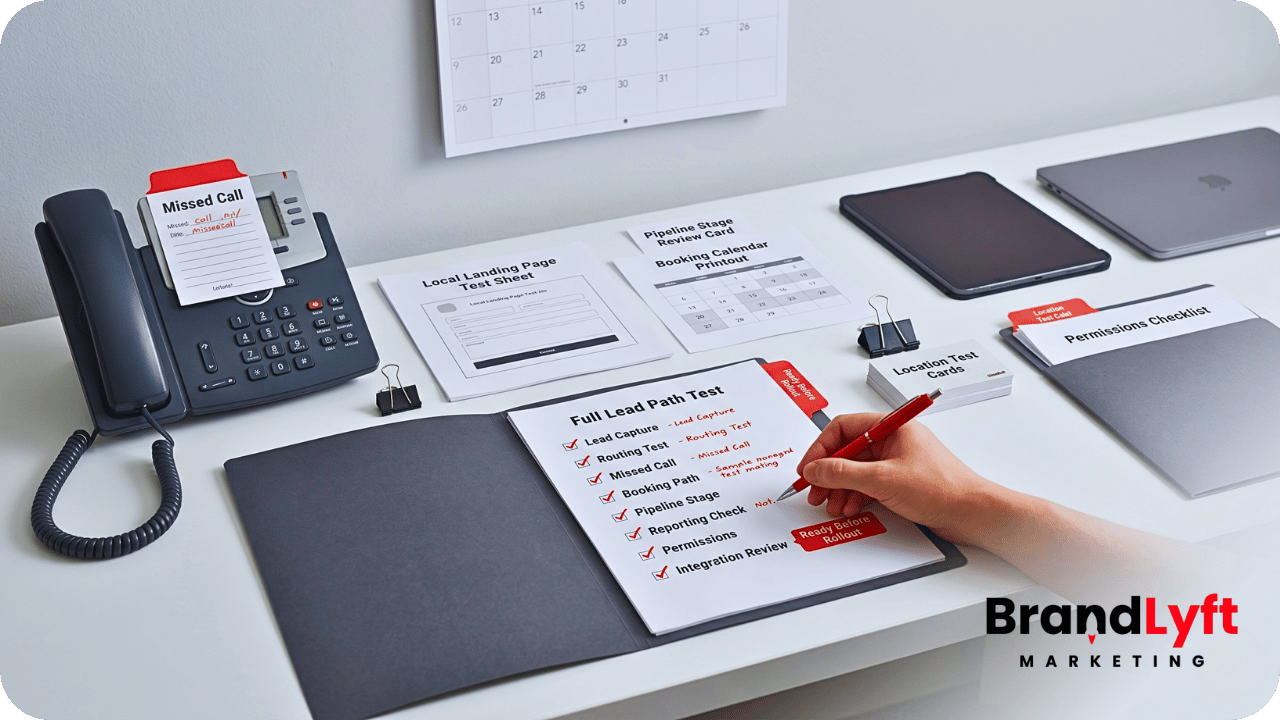
Checklist Item 11: Test the Full Lead Path Before the Next Location Goes Live
The final checklist item is a full lead-path test.
Do not only check workflows one by one.
Test the buyer journey from entry to outcome.
Submit a test lead through each major source. Call the location after hours. Trigger a missed call. Book an appointment. Reply to the first automated message. Let a task become overdue. Move an opportunity through the pipeline. Check what corporate can see afterward.
The goal is to find the breaks before the next location copies them.
A full test should answer:
- Did the lead enter with clean source data?
- Did the right location receive it?
- Did the right person get the next action?
- Did the first response happen fast enough?
- Did the booking path match the location?
- Did the pipeline update correctly?
- Did reporting show what happened?
- Did the fallback path catch stalled activity?
If the account fails this test, the next location should wait.
That delay is not wasted time. It prevents the franchise from copying a broken handoff into another branch.
What BrandLyft Looks For Before a Multi-Location GHL Expansion
When BrandLyft reviews a GoHighLevel multi-location setup, the first question is not “Can we add another location?”
The better question is “Should this setup be copied yet?”
A review may cover lead capture, routing, missed-call recovery, pipeline stages, calendars, reporting, permissions, user roles, team usage, integrations, workflow naming, templates, source tracking, and fallback rules.
The review may show that the account only needs cleanup.
It may show that some workflows need tightening. It may show that reporting needs better inputs. It may show that each location needs a clearer owner. It may also show that the current setup was patched too many times and needs deeper rebuild work before expansion.
That distinction matters.
A franchise does not need to slow down for the sake of being careful. It needs to slow down when speed would copy the same operational mistakes into more locations.
BrandLyft’s GoHighLevel for Franchises team helps franchise and multi-location brands review the system before the same gaps spread wider.
Do Not Add Locations to a Setup You Do Not Trust Yet
Use the GoHighLevel Implementation Playbook to review workflows, routing, calendars, permissions, pipelines, reporting, integrations, and launch readiness before the next location goes live.
FAQ About GoHighLevel Multi-Location Setup
What should a GoHighLevel multi-location setup include?
A GoHighLevel multi-location setup should include clean lead capture, location routing, missed-call recovery, standard pipeline stages, calendar rules, reporting visibility, user permissions, team usage rules, integrations, and a clear corporate-to-local handoff.
When should a franchise clean up GHL before adding more locations?
A franchise should clean up GHL before adding more locations when current branches use the system inconsistently, leads need manual reassignment, reporting feels hard to trust, missed calls sit too long, or local teams work outside the CRM.
Should every location use the exact same GHL setup?
Every location should follow the same core structure, but not every detail has to be identical. The franchise may need location-specific calendars, users, service areas, routing rules, and staffing logic while keeping shared reporting and pipeline definitions consistent.
Can BrandLyft help review a live GHL account before expansion?
Yes. BrandLyft can review a live GHL account before more locations get added. The review should look at the full handoff from lead capture to routing, follow-up, booking, pipeline movement, reporting, team usage, and integrations.
The Real Checklist Question: Should This Setup Be Copied?
A GoHighLevel multi-location setup does not fail only because more locations get added.
It fails when the franchise copies a setup that was already unclear.
Before the next rollout, look at the account honestly.
Can every location capture leads cleanly? Can the right branch receive the lead? Can missed calls trigger real follow-up? Can pipeline stages mean the same thing everywhere? Can owners see what happens after a lead arrives? Can local teams use the system without creating side processes? Can integrations protect the handoff instead of adding duplicate work?
If the answer is yes, expansion gets safer.
If the answer is no, the next location may only make the problem harder to fix.
Do the cleanup first.
Then add locations to a system the franchise can actually trust.