GoHighLevel for Pest Control Franchises: How to Capture, Route, and Follow Up With More Leads
GoHighLevel for pest control franchises should help every lead move from first contact to booked service without getting lost between forms, calls, ads, office staff, technicians, and locations.
That is where the real problem usually sits.
A pest control brand may already have GoHighLevel. Leads may enter through forms. Calls may get tracked. Ads may run. Local listings may send traffic. Angi or HomeAdvisor leads may come in. Office staff may answer phones. Technicians may handle estimates or service questions.
Still, leads slip.
Some inquiries go to the wrong territory. Some form submissions wait too long. Some missed calls get a text but no real callback. Some booking reminders do not match the service window. Some opportunities sit in the wrong stage. Corporate sees lead volume, but not which location or campaign created the booked job.
That is not a basic CRM problem.
It is a pest control lead-flow problem.
The point is not “pest control companies need GoHighLevel.”
The sharper point is this: a pest control franchise already using GHL still needs a setup that matches how pest control leads actually move.
That means clean lead capture, territory-based routing, fast text-back, missed-call recovery, booking reminders, office handoff, technician visibility, and reporting that shows what happened by location or campaign.
Without that structure, GoHighLevel can look busy while serious leads still leak through the cracks.
Find Where Pest Control Leads Are Slipping
The GHL Implementation Scorecard helps service businesses check whether forms, calls, routing, calendars, follow-up, pipelines, and reporting are actually working inside GoHighLevel.
Why GoHighLevel for Pest Control Franchises Needs a Real Lead-Flow Plan
GoHighLevel for pest control franchises needs more than forms, workflows, and a basic pipeline.
Pest control leads do not all behave the same way.
One person may need a termite inspection. Another may need rodent exclusion. Another may want recurring mosquito treatment. A property manager may need service across several units. A homeowner may call after seeing activity in the attic. A buyer from a local ad may want the nearest branch. A lead from Angi or HomeAdvisor may expect a fast callback because several providers may contact them.
That variety matters.
If every lead enters the same generic path, the team has to clean up the details manually. Office staff may ask the same qualifying questions again. A lead may route to the wrong service area. A technician may receive too little context. A manager may not know which campaign produced the booked inspection.
GHL can support the process, but only when the account reflects the way the pest control business works.
BrandLyft’s older pest control GoHighLevel article covers the broader value of using GHL in the pest control space. This article goes deeper into the lead-flow setup pest control franchises need when calls, forms, territories, campaigns, office teams, and service teams all touch the same buyer journey.
GoHighLevel for Pest Control Franchises Starts With Cleaner Lead Capture
Lead capture is the first weak point to check.
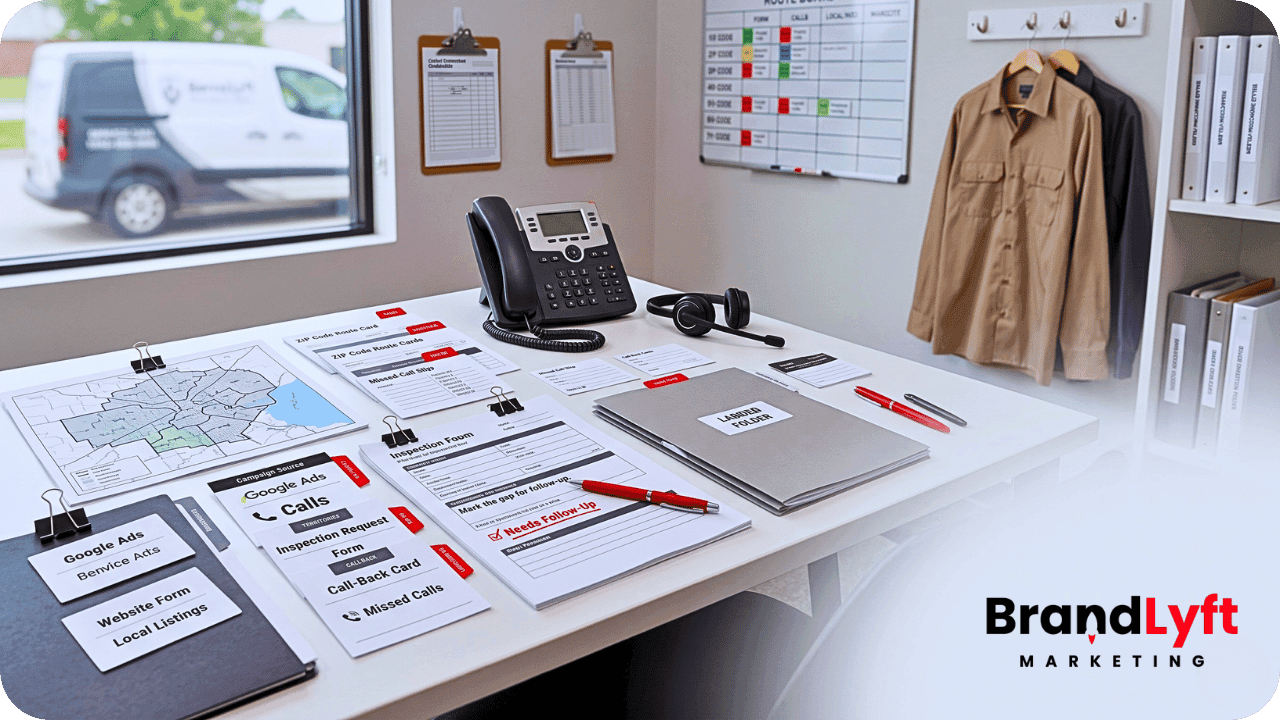
Pest control leads can enter from many places. Website contact forms, quote forms, inspection requests, Google Ads, Meta ads, Google Business Profile calls, local service pages, Angi, HomeAdvisor, referral sources, live chat, missed calls, and direct phone calls may all feed the business.
The problem starts when those sources enter GHL with uneven context.
One form may capture pest type, ZIP code, property type, and preferred time. Another may only capture name and phone number. A call may create a contact but no service note. A marketplace lead may arrive without the same source fields as a website form. A local listing call may reach the office, but not land cleanly inside the CRM.
That makes the next step harder.
Before building more follow-up, pest control franchises should review every lead source and decide what information GHL needs at entry.
That usually includes:
- Lead source
- Campaign or listing source
- Service area or ZIP code
- Pest type or service request
- Location or branch ownership
- Urgency level when relevant
- Preferred contact method
- Booking or inspection request status
HighLevel’s Form Submitted workflow trigger can help start automation when a form comes in. The business still has to decide what each form needs to collect before the workflow starts.
A clean pest control setup does not treat all submissions as the same lead.
It captures enough information to route, respond, book, and report without forcing the office team to solve every missing detail by hand.
Lead Routing Should Match Pest Control Territories
Routing is where many pest control franchises lose time.
A lead may look simple until the business has multiple branches, overlapping service areas, different technician coverage, franchise territories, seasonal demand, or service-specific rules.
One branch may handle wildlife but not termites. Another may cover a nearby ZIP code only on certain days. A corporate campaign may send leads across several local markets. A local office may own the customer relationship, while a technician handles the estimate.
GoHighLevel for pest control franchises should route leads based on how the business actually assigns work.
That may mean routing by ZIP code, county, city, service area, branch, technician zone, pest type, service line, campaign, or local office ownership.
The wrong routing rule creates slow follow-up even when automation fires quickly.
A lead can receive an instant text and still sit in the wrong office queue. A manager can get an alert for a property outside the branch’s territory. A technician can receive an estimate request without knowing who should own the next step.
BrandLyft’s article on GoHighLevel lead routing for franchises goes deeper on the multi-location handoff. Pest control teams should apply that same thinking to territory rules, service areas, branch ownership, and fallback paths.
Fast routing only matters when the right team receives a lead they can act on.
Fast Text-Back Should Not Replace Real Follow-Up
Speed matters in pest control.
A homeowner who just found ants in the kitchen, roaches in a rental, termites near a window frame, or scratching sounds in the attic may not wait long. They may submit several forms, call more than one company, or respond to the first business that gives them a clear next step.
That is why fast text-back matters.
HighLevel’s Send SMS workflow action can support instant replies, reminders, updates, and follow-up messages inside workflows. For pest control teams, the bigger question is what the first text should do.
A weak first text says the business received the inquiry and stops there.
A stronger first text confirms the request, sets expectation, and moves the lead toward booking or a callback.
For example, a pest control lead may need one of several next steps:
- Schedule an inspection
- Confirm the service address
- Ask for pest type or urgency
- Route to a local office
- Trigger an office callback task
- Send a booking link that matches the right branch
Fast text-back should create clarity, not just activity.
BrandLyft’s speed-to-lead automation for franchises article explains this broader issue. A fast message helps, but the lead still needs a clear owner, a booking path, and a fallback if nobody responds.
Missed Calls Need a Pest Control Recovery Path
Missed calls can hurt pest control brands because phone leads often carry high intent.
People call when the problem feels urgent, uncomfortable, or hard to explain in a form. A missed call may be a termite inspection, a recurring service question, a rodent issue, a wasp nest, or a commercial account asking for help.
A basic missed-call text is better than silence.
But pest control franchises need more than a basic text.
The missed-call path should identify the location, create a follow-up task, notify the right office or manager, record the call source, and continue follow-up if the buyer does not respond. It should also stop once the call gets handled or the appointment gets booked.
This matters across locations.
One branch may answer most calls but miss after-hours inquiries. Another may lose calls during busy seasonal windows. A third may call back quickly but forget to update the opportunity. Corporate needs to see those differences.
BrandLyft’s Speed to Lead service fits this part of the setup because pest control teams do not only need faster response. They need response ownership.
The right missed-call system should answer a plain question: who owns this call now?
Booking Reminders Should Match the Service Window
Booking reminders can look easy until pest control operations get involved.
Some appointments may be inspections. Others may be treatment visits, follow-up treatments, estimates, exclusion work, commercial visits, or recurring service. Some need a time window. Some need access instructions. Some need the customer to prepare the property.
If reminders do not match the service type, the message can create confusion.
A termite inspection reminder should not read like a generic sales call. A mosquito treatment reminder may need different expectations than a rodent inspection. A commercial account may need a different confirmation path from a homeowner.
HighLevel’s calendars and appointments resources cover the platform side of booking and scheduling. Pest control franchises still need to decide how reminders should work by service type, location, technician availability, and office process.
Good booking reminders should reduce missed appointments and reduce office questions.
They should tell the customer what happens next, remind them at the right time, and keep the local team aware of the appointment status.
If the booking path sits outside GHL, the setup still needs a way to reflect the booking result inside the CRM. Otherwise, GHL may keep treating a booked customer like a new inquiry.
The Office and Technician Handoff Has to Be Clear
Pest control lead flow does not stop at the office.
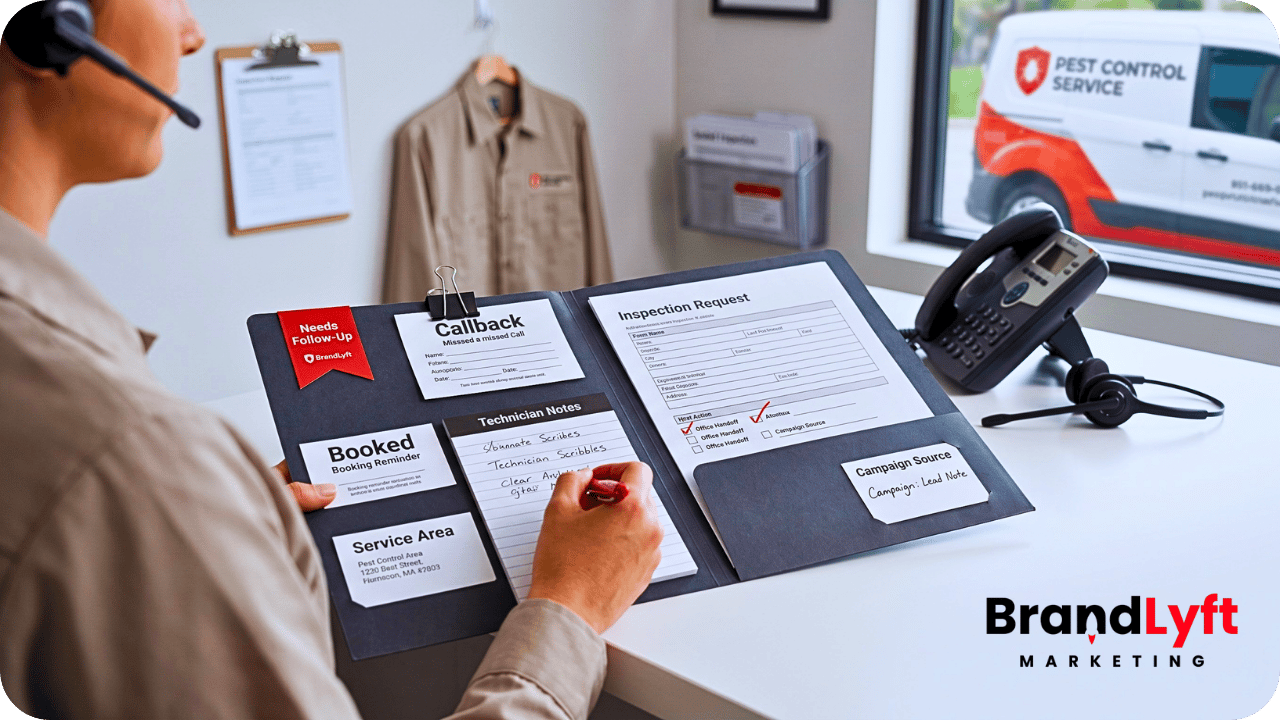
The office may answer the call, qualify the request, book the inspection, and update the opportunity. A technician may need service notes, pest type, property access details, customer concerns, photos, or estimate context. A manager may need visibility if the lead stalls or the customer asks for a different service.
That handoff can break when GHL only tracks the front-end lead.
A lead gets captured. A text goes out. The office books the visit. Then the technician receives information somewhere else. The CRM no longer shows the full story.
For a single location, that may survive for a while.
For a pest control franchise, it creates reporting gaps and duplicated work.
GoHighLevel for pest control franchises should define what GHL needs to track and what another field-service or scheduling tool may own. The answer will vary by business, but the rule is the same: the office and technician should not rely on memory, side texts, or separate notes that never make it back into the lead record.
At minimum, the setup should clarify:
- Who qualifies the lead
- Who books the appointment
- Who updates the pipeline
- Where service notes live
- What the technician needs before arrival
- What status should return to GHL after the visit
BrandLyft’s Revenue System Build service is built around this kind of handoff. Pest control brands do not need a pretty CRM. They need a system that follows the lead from inquiry to booked job and next step.
Pipeline Stages Should Reflect Pest Control Sales Reality
Pipeline stages should show where the lead actually sits.
That sounds simple. In practice, many service businesses use stages that feel too generic for how the team sells.
A pest control pipeline may need stages such as new lead, contacted, inspection booked, inspection completed, estimate sent, treatment booked, won, lost, no answer, and nurture. The exact stages depend on the business model, but each stage should mean something clear.
HighLevel’s pipeline documentation explains how pipelines track opportunities through sales and service stages. Pest control franchises still need to define what stage movement means in daily work.
For example, does “contacted” mean an automated text went out, or does it mean the office spoke with the customer?
Does “inspection booked” mean the customer selected a slot, or did the office confirm the appointment?
Does “won” mean the first treatment was booked, the estimate was approved, or the recurring plan started?
If every location answers those questions differently, reporting loses value.
Before adding more campaigns or territories, pest control teams should define stage rules in plain language. The pipeline should match real sales behavior, not just look clean inside the CRM.
Reporting Should Show Leads by Location, Territory, and Campaign
Reporting is where disconnected pest control lead flow becomes obvious.
Corporate may see total leads, but that does not answer the useful questions.
Which campaign created booked inspections? Which territory gets the fastest response? Which location misses the most calls? Which lead source creates the most no-shows? Which office team follows up after no answer? Which branch has strong lead volume but weak booking rate?
Those questions matter because pest control marketing can look good at the top of the funnel while the lead flow breaks after capture.
A campaign may create leads that do not book because follow-up is too slow. A local listing may create strong phone calls, but missed-call handling may be weak. Angi or HomeAdvisor leads may look expensive until the team separates source quality from callback speed.
GoHighLevel for pest control franchises should help leaders compare locations, territories, campaigns, and outcomes without chasing every office manually.
BrandLyft’s article on GoHighLevel reporting for multi-location brands covers the reporting layer in more depth. For pest control, the key is connecting source, branch, territory, follow-up, booking, and outcome.
If reporting only shows contact activity, the owner still has to guess where the lead leaked.
Marketplace Leads Need Faster Triage
Marketplace leads can create pressure for pest control teams.
Leads from Angi, HomeAdvisor, and similar sources often arrive when the buyer is already comparing providers. That means the first few minutes matter.
But speed is not the only issue.
The team also has to triage the lead correctly.
What service does the buyer need? Is the property inside the service area? Which office owns the territory? Does the pest type require a specific team? Should the lead get a fast callback, booking link, or qualification text?
If marketplace leads enter GHL with weak fields or unclear ownership, the office may have to sort them manually. That slows the response and makes reporting harder later.
A stronger setup should tag the source, assign the right owner, trigger the right first response, and show whether the lead turned into a booked inspection or treatment.
That is the difference between simply receiving third-party leads and actually working them through a system.
Local Listings and Phone Calls Need Source Discipline
Pest control buyers often come through local search.
They may call from a Google Business Profile, click a local service page, submit a form from a city page, or find the company through a directory.
If those leads enter GHL without clean source tracking, reporting gets cloudy fast.
The team may know that calls increased, but not which local listing or campaign drove the better booked jobs. One location may look stronger because it gets more branded calls. Another may look weaker because it handles more urgent or lower-fit requests.
Source discipline matters because it changes budget decisions.
A pest control franchise should know which lead sources create booked inspections, which campaigns create unqualified leads, and which locations need better follow-up rather than more traffic.
BrandLyft’s home services marketing page connects this point to the larger home-service system: calls, estimates, crews, tracking, missed-call handling, and booked jobs all need to work together.
Traffic alone does not fix a weak lead path.
What BrandLyft Looks For in a Pest Control GHL Cleanup
When BrandLyft reviews GoHighLevel for pest control franchises, the first question is not “Does the account have workflows?”
The better question is “Can the business see and control the lead path from first contact to booked service?”
A cleanup may review form fields, call tracking, source tags, campaign attribution, territory rules, branch assignment, missed-call workflows, SMS timing, appointment reminders, pipeline stages, office tasks, technician notes, reporting dashboards, and any outside systems that hold booking or job data.
Some fixes may be simple.
A form may need better fields. A workflow may need a tighter trigger. A missed-call path may need a manager alert. A pipeline stage may need a clearer rule. A booking reminder may need service-specific wording.
Other fixes may point to a deeper setup issue.
If nobody trusts the pipeline, if locations update records differently, if leads from third-party sources need manual cleanup every day, or if reporting cannot show booked jobs by source, the account may need more than small patches.
BrandLyft’s GoHighLevel Partner team can review the setup when the account is live but the lead flow still feels unreliable.
Your Pest Control Leads Need a Cleaner Path
Use the GHL Implementation Scorecard to check lead capture, routing, missed calls, booking, pipeline stages, follow-up, and reporting before more pest control leads keep slipping.
FAQ About GoHighLevel for Pest Control Franchises
What should GoHighLevel for pest control franchises track?
GoHighLevel for pest control franchises should track lead source, campaign, service area, pest type, branch ownership, response time, missed-call recovery, booking status, pipeline movement, and outcome by location or campaign.
Why do pest control leads get lost inside GHL?
Pest control leads get lost when forms, calls, ads, local listings, and marketplace sources enter the account with weak routing or unclear ownership. The workflow may fire, but the right office, technician, or manager may not own the next step.
Can GHL help with missed pest control calls?
Yes. GHL can support missed-call text-back, follow-up tasks, manager alerts, and continued follow-up. The setup still needs clear location ownership and reporting so missed calls do not sit unnoticed.
Should pest control franchises route leads by territory?
Most pest control franchises should route leads by territory, ZIP code, branch, service area, pest type, or local office ownership. The right rule depends on how the business assigns work and handles service coverage.
What is the best CTA for a pest control brand already using GHL?
The GHL Implementation Scorecard is a strong first step for pest control brands that already use GHL but suspect forms, routing, calls, pipelines, calendars, or reporting need cleanup.
The Real Goal Is Fewer Lost Leads and Cleaner Booked Jobs
GoHighLevel for pest control franchises should not feel like another place the team has to check.
It should help the business move faster.
A lead comes in. The system captures the right details. The right location gets ownership. The first text goes out quickly. A missed call triggers a real recovery path. The booking reminder matches the service. The office and technician know what happened. Reporting shows which location or campaign produced the booked job.
That is the standard.
If a pest control franchise already uses GHL but still loses leads between forms, calls, ads, territories, office staff, and field teams, the problem may not be lead volume.
The problem may be the path after the lead arrives.
Fix that path first.
Then every campaign, listing, form, and phone call has a better chance of turning into a booked service instead of another missed opportunity.