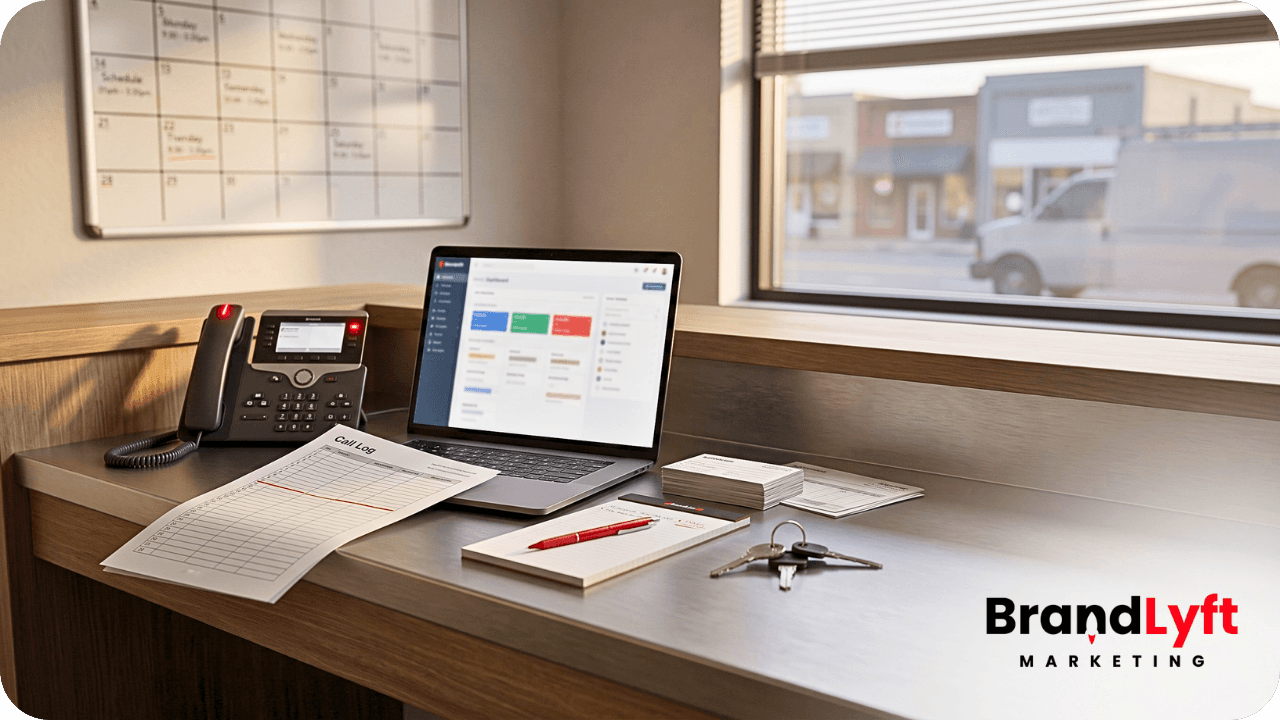

GoHighLevel Lead Routing for Franchises Already Using GHL
GoHighLevel lead routing for franchises often breaks after the software goes live.
Your team may already have forms, pipelines, calendars, workflows, and dashboards inside the account. The system may look active on the surface.
Still, leads disappear. Some go to the wrong location. Some sit too long before follow-up. Others get handled differently depending on which branch receives them.
That does not always mean GoHighLevel failed. In most cases, the routing logic inside GoHighLevel does not match how the franchise really operates.
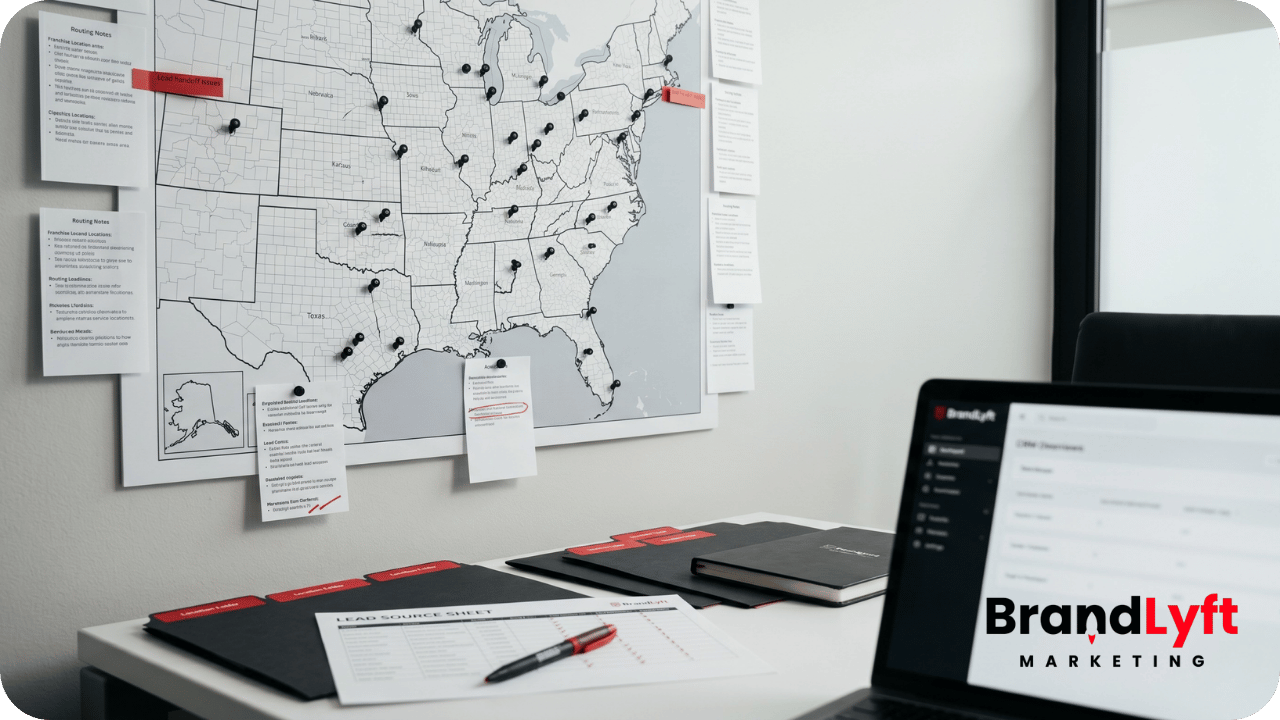
A franchise CRM setup has to do more than capture leads. It has to decide where each lead belongs, who owns the next step, what happens when that person does not respond, and how leadership sees the handoff across every location.
That is where many accounts get messy.
Loose routing may survive in a single-location setup. A franchise setup does not have that luxury. Once multiple locations, service areas, calendars, managers, and local teams enter the picture, weak routing starts leaking leads quietly.
Check the Routing Before More Leads Hit the System
The Franchise GHL Optimization Map helps franchise and multi-location teams review lead capture, booking, routing, follow-up, reporting, and handoff before the same gaps spread wider.
Why GoHighLevel Lead Routing for Franchises Gets Messy After Setup
GoHighLevel lead routing for franchises gets messy when the original build focuses on tool setup instead of operating rules.
Someone may connect the forms, create workflows, add users, build calendars, and set up pipelines. That work matters. Routing, though, needs more than technical setup.
It turns business rules into CRM behavior.
Every setup has to answer a few plain questions:
- Which location should receive this lead?
- What happens when a lead sits between two locations?
- Who owns follow-up during business hours?
- Who owns missed calls after hours?
- What happens when the assigned person does not act?
- How does leadership see slow response by location?
When no one writes those rules clearly, GoHighLevel can only follow weak instructions.
This matters even more for appointment-based wellness franchises because routing is tied to location, service type, booking availability, and front-desk follow-up.
A franchise can have GHL installed and still have a weak handoff. The platform may follow the setup exactly, but the setup may not match the real franchise model.
Teams that need a cleaner rollout path usually need more than random workflow edits. BrandLyft’s GoHighLevel for Franchises work helps make GHL usable across locations, not just live inside the account.
The First Franchise Lead Routing Problem: Leads Enter From Too Many Places
A franchise lead does not always come through one clean form.
It may come from a paid ad, local landing page, website form, phone call, chat widget, referral campaign, directory listing, booking page, missed call, text thread, or imported contact list.
That creates the first routing problem.
Different sources often carry different fields, tags, workflows, and assignment rules. When that happens, the franchise team loses one clean routing standard.
One source may send contacts to the right location. Another may notify corporate only. A third may create an opportunity without assigning an owner. A fourth may start follow-up but skip the local manager.
From the outside, the account looks active. Inside the business, the handoff feels random.
Good GoHighLevel lead routing for franchises starts by mapping every lead entry point before anyone changes workflows. Otherwise, the team may fix one source while another source keeps leaking leads.
Paid traffic makes this worse. More ad spend will not fix unclear routing. It only sends more contacts into the same weak handoff.
For brands trying to shorten response times, BrandLyft’s Speed to Lead service connects directly to this problem because fast response depends on clean assignment, not just faster notifications.
The Second Franchise Lead Routing Problem: Territory Rules Stay Too Vague
Franchise lead routing sounds simple until real territories show up.
Some businesses route by ZIP code. Others route by nearest location, city, service area, ownership group, appointment type, staff availability, or local capacity.
The hard part is not choosing one rule. The hard part is handling exceptions.
What happens when a ZIP code sits between two locations? What happens when one location closes on a day another stays open? What happens when the customer asks for a branch outside the home market? What happens when a corporate campaign brings in a lead with incomplete location data?
When the CRM has no answer, someone handles it manually.
That manual step may work when lead volume stays low. It breaks once the franchise grows, campaigns expand, or local teams get busy.
Strong GoHighLevel lead routing for franchises needs territory rules that the team can maintain without guesswork.
The goal is not the most complicated routing tree. The goal is simple: send the right lead to the right team while the buyer still cares.
The Third Franchise Lead Routing Problem: Assignment Does Not Mean Ownership
One common GHL routing mistake comes from treating contact assignment like lead ownership.
Those are not the same thing.
A user may receive a contact assignment, yet the local team may still wonder who should call, text, book, update the pipeline, leave notes, or move the opportunity forward.
This is where franchises lose time.
A lead lands with a location. The workflow sends a notification. The pipeline stage changes. Everyone assumes the system handled the next step.
But no one actually owns the next action.
That creates a dangerous kind of silence. The CRM looks like it worked, but the buyer still waits.
GoHighLevel lead routing for franchises should define ownership in plain operational terms. The setup should show who handles the first response, who takes over after booking, who follows up on no-shows, and who keeps working the lead when the buyer does not answer.
HighLevel’s support docs on user roles, permissions, and assigned data show why access rules matter. In a franchise setup, permission design belongs inside the routing conversation, not off to the side as admin cleanup.
When the account needs deeper cleanup across workflows, assignment, integrations, and reporting, BrandLyft’s Revenue System Build service fits better because the fix usually reaches beyond one workflow edit.
The Fourth Franchise Lead Routing Problem: Calendars Ignore Real Location Behavior
Lead routing and booking connect directly.
The buyer still gets a bad experience when the right location receives the lead but the wrong calendar controls the next step.
This happens when every location has different hours, staffing, service types, room capacity, consultation rules, or booking preferences, while the GHL setup treats every branch the same.
Franchise teams feel this quickly.
When routing depends on location, service type, capacity, customer status, or team availability, the account may need custom routing logic instead of basic assignment rules.
One location may take same-day calls. Another may need manager approval for certain appointment types. A third may offer weekend availability. A fourth may need different follow-up rules because of staffing limits.
When the calendar setup ignores those differences, routing creates friction instead of clarity.
The lead may reach the right branch but receive the wrong appointment option. The system may book the wrong staff member. The team may get a notification and still need to confirm details manually.
HighLevel’s calendars and appointments resources explain the booking mechanics. A franchise still has to match that calendar layer to the location routing rules.
A cleaner setup ties location assignment to the real booking path. Calendars, reminders, no-show follow-up, reschedules, and local staff notifications should reflect how each location actually works.
This is why GoHighLevel lead routing for franchises needs a full buyer-journey review. Routing, calendars, workflows, and pipeline stages all touch the same handoff.
The Fifth Franchise Lead Routing Problem: Pipeline Stages Hide Handoff Gaps
A pipeline can make the system look organized while the handoff stays weak.
That creates risk for franchise teams because leadership may look at the pipeline and assume every location follows the same process.
Pipeline stages only help when every location uses them the same way.
One location may move leads to “Contacted” after one text. Another may wait until a phone call happens. A third may forget to update the stage at all. Once that happens, reporting starts losing value.
Then the franchise team stops trusting the dashboard.
People create side systems after trust drops. They check spreadsheets. They ask managers for updates. They chase reps in text threads. They manually confirm what the CRM should already show.
That usually starts as a routing and ownership problem, then shows up as a reporting problem.
HighLevel’s docs on understanding pipelines explain how pipeline stages organize opportunities. For franchises, those stages only become useful when every location applies them consistently.
GoHighLevel lead routing for franchises should connect the assigned owner, pipeline stage, follow-up task, and next step. If those pieces stay disconnected, the pipeline may track activity without showing accountability.
BrandLyft’s article on a stalled GoHighLevel account is a useful next read because stalled accounts often leak leads through slow follow-up, weak handoff, broken workflows, and reporting gaps.
The Sixth Franchise Lead Routing Problem: No Fallback Path Exists
Every franchise routing system needs a fallback path.
Many GHL accounts get too optimistic here.
They assume the assigned user will respond. They assume the local team will check tasks. They assume the manager will notice overdue leads. They assume the workflow notification will carry enough weight.
Real teams miss things.
Phones get busy. Staff call out. Managers travel. Locations get overloaded. New hires forget the process. Leads come in after hours. Notifications get buried.
When the CRM has no fallback rule, the lead sits.
A better setup defines what happens when the first owner does not act. That may include a manager alert, task escalation, re-routing rule, missed-call recovery workflow, corporate visibility, or a second follow-up path.
HighLevel workflows can handle triggers and actions, but the business still has to decide what should happen when a lead stalls. The HighLevel workflows guide explains the mechanics, not the operating rules.
The point is not to punish the local team. The point is to protect the buyer experience and keep the franchise from losing leads no one noticed.
GoHighLevel lead routing for franchises should make stalled leads visible before they turn into lost revenue.
The Seventh Franchise Lead Routing Problem: Corporate Cannot Compare Location Performance
Franchise leadership needs more than a lead count.
Leaders need to know what happened after the lead entered the system.
Did the lead route to the right location? How fast did that location respond? Did someone book an appointment? Did the lead move through the pipeline? Did follow-up happen after no answer? Did one location work the lead better than another?
Messy routing weakens location reporting.
This is where corporate teams often get stuck. The dashboard has numbers, but the numbers do not explain the real breakdown.
One location may look slow because it receives more incomplete leads. Another may look productive because it updates stages differently. A third may work leads outside the CRM. A fourth may have a workflow issue that makes response time look cleaner than reality.
GoHighLevel lead routing for franchises should help leadership compare locations fairly. That means the setup needs clean source tracking, location assignment, owner assignment, pipeline rules, response tracking, and consistent status updates.
Without clean inputs, the dashboard becomes a confidence problem.
For routing setups that need cleaner data movement between GHL and other tools, BrandLyft’s CRM and app development work can help connect forms, apps, dashboards, webhooks, and custom workflows into a cleaner operating flow.
How to Review GoHighLevel Lead Routing for Franchises
A routing review should start with the buyer journey, not the workflow list.
Pick a few real lead paths and follow them from entry to outcome.
For example, review what happens when a lead comes from a local landing page, a paid ad, a missed call, a booking form, and a general website contact form.
For each path, check the same core questions:
- Where does the lead enter GHL?
- What fields, tags, or source data come with it?
- Which location receives it?
- Who owns the next action?
- What workflow fires next?
- What task, notification, or message goes out?
- What happens when the owner does not respond?
- Where does leadership see the result?
This review usually reveals the real issue fast.
Sometimes the lead enters correctly but routes poorly. Sometimes the assignment works, but the workflow feels too generic. In other cases, the workflow runs fine while the local team ignores the pipeline. Reporting can also get noisy when each location updates records differently.
That is why GoHighLevel lead routing for franchises should get checked as a full handoff path, not as one automation.
What BrandLyft Looks For in Franchise Lead Routing Cleanup
When BrandLyft reviews a franchise GHL setup, the question is not just “Are workflows turned on?”
A sharper question is “Does the system match how this franchise sells, books, follows up, and reports across locations?”
A routing cleanup may review lead sources, location rules, custom fields, contact assignment, opportunity creation, pipeline stages, workflow triggers, calendar links, task rules, missed-call recovery, user permissions, manager alerts, and reporting views.
The work may also include removing duplicate logic.
Old workflows can keep firing long after the team forgets why someone built them. A franchise may have one workflow from an early campaign, another from a later location rollout, another from a vendor handoff, and another from an internal quick fix.
Each piece may have made sense at the time. Together, they can create conflicting routing behavior.
GoHighLevel lead routing for franchises should feel boring in the best way. A lead enters. The right location gets it. The right person owns it. The next step feels clear. A fallback path exists. Leadership can see what happened.
That is the standard.
BrandLyft’s GoHighLevel Partner team can review the account when the setup is live but the handoff still feels unreliable.
Already Have GHL But Still Losing Leads Between Locations?
Start with the routing map before you rebuild another workflow. It will help your team spot where capture, booking, assignment, follow-up, reporting, or handoff may break.
FAQ About GoHighLevel Lead Routing for Franchises
Is GoHighLevel lead routing for franchises only about automation?
No. Automation only handles part of the work. GoHighLevel lead routing for franchises also depends on territory rules, user roles, calendar setup, pipeline ownership, fallback paths, and team behavior.
Why do leads still get lost if GHL is already installed?
Leads usually disappear when the account captures them but fails to assign clear ownership. The contact may exist in GHL, but the local team may not know who should respond, what should happen next, or where to update the record.
Should every franchise location use the same routing setup?
The core standard should stay consistent, but every location may not need the exact same rules. A cleaner setup usually uses shared routing logic with location-specific details for hours, staff, territory, services, calendars, and escalation paths.
Can BrandLyft fix routing without rebuilding the whole GHL account?
Sometimes, yes. If the account is mostly clean, the fix may only need a routing review, workflow cleanup, and clearer ownership rules. If the account has duplicate workflows, weak data, broken calendars, and inconsistent location usage, the cleanup may need to go deeper.
The Real Fix for GoHighLevel Lead Routing for Franchises
GoHighLevel lead routing for franchises is not about adding more automation for the sake of activity.
The real work is making the handoff clear enough that every location knows what to do when a lead arrives.
A franchise does not need more CRM motion when the routing logic is wrong. It needs cleaner rules.
Who gets the lead? Why do they get it? What happens next? What happens if they do nothing? Where does leadership see the result?
Clear answers make GoHighLevel easier to trust across locations.
Missing answers create the opposite problem. The account may look active while the business keeps leaking leads.
If your franchise already uses GHL but lead handoff still feels inconsistent, start by reviewing the routing path before pushing more campaigns, more traffic, or more locations into the same setup.
The fix may not be a new tool.
It may be a cleaner operating model inside the tool you already have.