
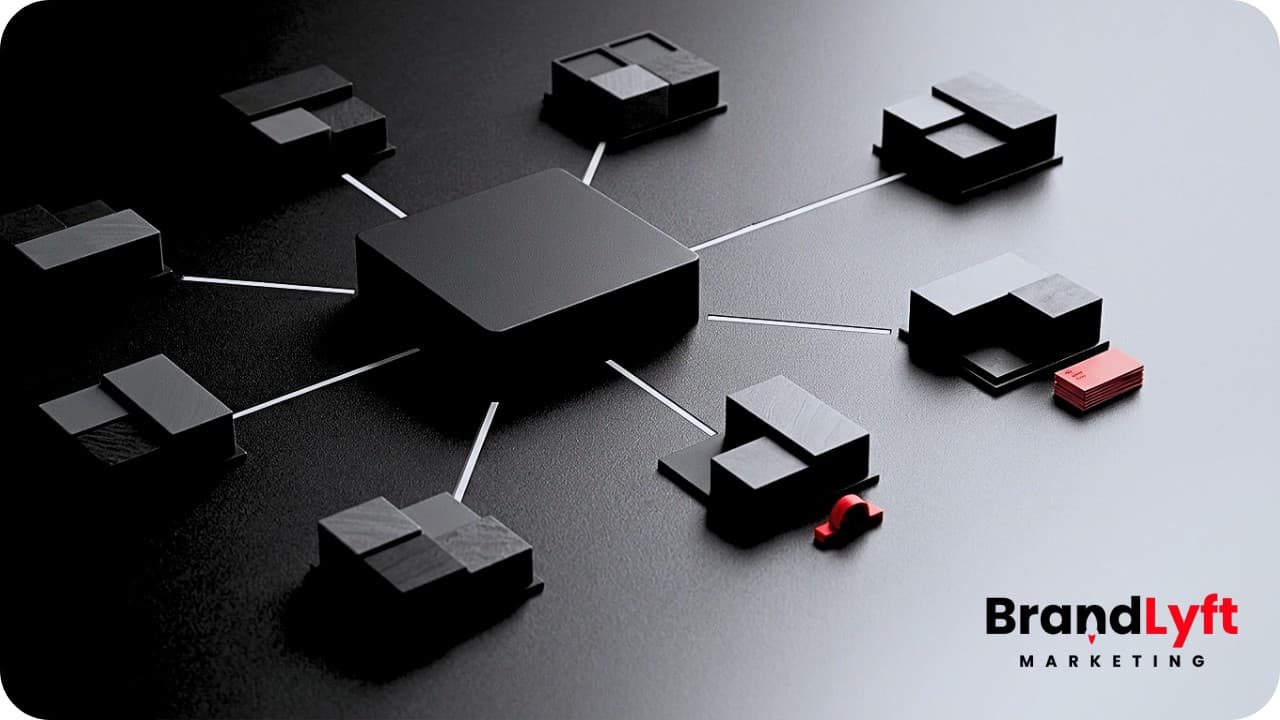
A GoHighLevel for franchises rollout can look clean at the corporate level and still break at the location level.
That is the part most teams underestimate.
The workflows look shared. The templates look consistent. The pipeline structure looks organized. Reporting looks easier from the top. Everyone agrees the brand needs one system instead of scattered location-by-location setup.
Then real leads start moving through it.
One location follows up quickly. Another misses the first alert. One manager trusts the pipeline. Another keeps a side spreadsheet. One team knows who owns the lead. Another assumes corporate is watching it. The rollout technically happened, but the handoff is uneven across locations.
That is where franchise GHL rollouts get expensive.
The goal is not just to install GoHighLevel across multiple locations. The goal is to make sure every location can capture, route, follow up, report, and stay accountable without losing the consistency the franchise needs.
If the rollout does not protect both sides, brand-level control and location-level execution, the system starts creating a new kind of mess.
Before You Roll This Out Across Locations
Use the GHL Rescue Decision Guide to spot weak routing, broken handoff, and follow-up gaps before they spread across every location.
Why GoHighLevel for Franchises Breaks During Rollout
A franchise rollout usually breaks for one of two reasons.
Either corporate keeps too much control and local teams feel boxed in, or each location gets too much freedom and the brand loses consistency.
Both create problems.
If every location builds its own version of the CRM, reporting gets messy. Workflows drift. Follow-up timing changes. Managers start comparing numbers that were captured in different ways. Brand standards become suggestions.
If corporate locks everything down too tightly, local teams may not have enough flexibility to handle real lead behavior, staffing differences, local service areas, seasonal demand, or location-specific follow-up.
The rollout has to sit between those two extremes.
That is why BrandLyft has dedicated franchise CRM rollout support. Multi-location setup is not just a bigger version of one-location setup. It needs repeatable structure, careful permissions, location-level ownership, and reporting that does not turn into a junk drawer.
Start With the GoHighLevel for Franchises Rollout Model
Before the workflows, calendars, permissions, or dashboards get touched, the franchise team needs one decision.
What should be standardized, and what should stay local?
That answer shapes the whole rollout.
Corporate usually needs control over the core structure: naming conventions, main pipelines, standard workflow logic, brand templates, reporting rules, compliance-sensitive messaging, and the basic lead path.
Locations usually need enough room to handle local staffing, availability, follow-up ownership, service areas, appointment capacity, and real customer conversations.
If that split is not clear, the rollout turns into conflict later.
Corporate thinks locations are not using the system correctly. Locations think corporate built something that does not match how the work actually happens. The truth is usually simpler: nobody defined the control line before launch.
Build Shared Workflows Without Creating Location-Level Confusion
Shared workflows are useful for franchises because they keep the brand from rebuilding the same logic over and over.
But shared does not mean careless.
A good rollout separates reusable workflow logic from local ownership rules.
For example, a franchise may want one standard new-lead workflow across all locations. That workflow can send the first confirmation message, create a task, notify the right team, and move the lead into the correct pipeline stage.
The shared part is the lead path.
The local part is who gets the task, who receives the alert, what calendar gets used, and who is responsible when the lead does not respond.
If those pieces are not separated, one workflow can create different problems in different locations. A lead might get the right brand message but land with the wrong staff member. A task might fire, but nobody local owns it. A manager may see the contact, but not know if the first call already happened.
HighLevel’s workflow documentation explains that workflows start with triggers and then run actions after a contact enters the workflow. That structure is powerful, but a franchise rollout still has to decide who owns each action after it fires. Review HighLevel’s workflow basics before cloning workflow logic across locations without ownership rules.
If the shared automation layer is already messy, BrandLyft’s article on GoHighLevel setup mistakes is a useful bridge because it shows how feature-first builds create weak handoff and low team trust.
Define Location-Level Follow-Up Before Leads Go Live
Follow-up ownership is where franchise rollouts usually get exposed.
Corporate can design the system, but the location still has to work the lead.
That means every location should know the answer to basic questions before launch.
- Who gets the lead first?
- Who calls after a form submission?
- Who handles missed calls?
- Who follows up if the first contact does not answer?
- Who moves the opportunity after booking?
- Who watches stuck leads?
- Who checks late follow-up?
Those questions cannot be left to training day.
They need to be built into the rollout.
For a home-service franchise, one location may have a dispatcher watching inbound calls all day. Another may have an owner-operator answering between jobs. Another may have a front desk team. If the same workflow assumes the same staffing model everywhere, the follow-up path will break.
That does not mean every location needs a custom system from scratch.
It means the shared system needs local handoff rules that match how each location actually works.
A clean GoHighLevel for franchises rollout should protect local follow-up ownership before leads start moving through the system.
Set Permissions So Teams See What They Need and Nothing Extra
Permissions are not just an admin detail in a franchise rollout.
They are part of the operating model.
Corporate may need visibility across locations. Regional managers may need access to several locations. Local managers may need full access inside their own account. Front desk or sales staff may only need the contacts, conversations, calendars, pipeline stages, tasks, and workflows that affect their role.
If permissions are too loose, the account gets risky and harder to maintain.
If permissions are too tight, the team cannot do the work without asking for help every time something normal happens.
HighLevel’s permissions documentation covers role-based access and assigned data inside sub-accounts, including ways to control what users can access. That matters for franchise teams because permission design affects both security and daily work. Review HighLevel’s sub-account user roles and permissions guide before giving every location the same access by default.
This is also where BrandLyft’s GoHighLevel Partner service fits. The work is not just turning features on. It is setting up the account so the right people can run the right parts without breaking the structure later.
Keep Reporting Consistent Without Killing Local Accountability
Reporting is one of the biggest reasons franchises want one GoHighLevel rollout in the first place.
But reporting only works if the data is captured consistently.
If each location uses different stages, different tags, different source names, different close reasons, or different follow-up habits, the dashboard may look active while the numbers are hard to trust.
A clean rollout should define the core reporting rules before launch.
That usually includes standard pipeline stages, standard lead-source naming, required fields, close reasons, appointment outcomes, missed-call tracking, and rules for when an opportunity should move.
Local teams should not have to guess what “contacted,” “booked,” “estimate sent,” or “won” means.
Those definitions need to be the same across locations.
Before rollout gets too wide, it is worth checking where basic GoHighLevel setup for wellness franchises starts breaking across booking, reminders, local handoff, and follow-up ownership.
HighLevel’s custom dashboard documentation describes dashboards as configurable reporting spaces where teams can track KPIs from contacts, appointments, opportunities, calls, revenue, and more. That is useful only if the rollout keeps the underlying data clean. Review HighLevel’s custom dashboard guide before building franchise-wide reporting on messy inputs.
If reporting is already weak because follow-up and ownership are unclear, BrandLyft’s article on a stalled GoHighLevel account shows how slow response, weak handoff, and unreliable pipeline logic start leaking leads quietly.
Train Location Teams Before Launch, Not After Something Breaks
Training should not be treated like a final walkthrough after the rollout is already done.
It should be part of launch readiness.
Every location does not need to understand every setting in GoHighLevel. They need to understand the parts they touch every day.
Where do new leads land? What does a hot lead look like? Who calls first? How does the team know if a lead replied? When should a stage change? What should happen after booking? What should a manager check at the end of the day?
That kind of training matters because adoption is usually where clean corporate rollouts get messy.
A system can be built correctly and still fail if the location team does not know how to use it during normal work.
For example, a franchise may have a strong missed-call workflow. But if the local team does not know who is supposed to watch missed-call tasks, the workflow only creates noise. Or a location may have a clean pipeline, but if reps do not update stages, corporate reporting turns unreliable within a week.
Training should focus on the daily handoff, not the whole platform.
Use Phased Rollout Instead of Launching Every Location at Once
A full franchise rollout does not always need to launch everywhere on the same day.
Usually, that is the riskier path.
A phased rollout gives the team room to test the system with a smaller group of locations before every branch depends on it.
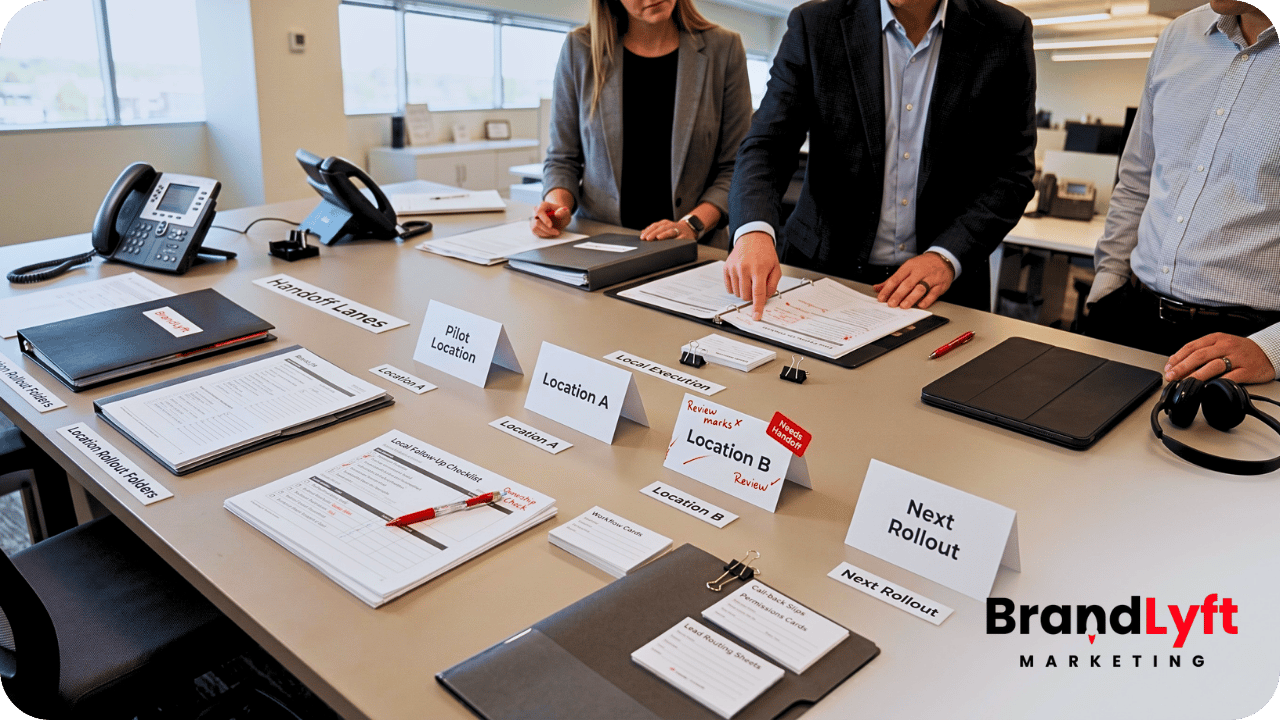
Start with a pilot location or a small group of locations that can give clear feedback. Watch the first lead paths. Check whether alerts make sense. Confirm that follow-up ownership is clear. See whether managers understand the reporting. Find where local staff get confused.
Then fix the rollout before expanding.
This is where a lot of friction gets caught before it spreads. A bad task name, weak notification, confusing stage, or unclear handoff may be minor in one location. Across 20 locations, it becomes a support problem.
BrandLyft’s Revenue System Build service is built around this kind of system thinking: lead capture, routing, follow-up, attribution, pipeline visibility, and workflows the team can actually use.
What a Clean GoHighLevel for Franchises Rollout Should Include
A clean rollout should not leave each location guessing.
Before launch, the franchise team should have the core structure mapped, tested, and explained.
The shared workflows should be named and documented. Location-level follow-up should have clear owners. Permissions should match each role. Dashboards should use consistent definitions. Training should show teams what to do during daily work. Reporting should show both corporate visibility and location accountability.
That is what separates a real rollout from a bulk import.
A bulk import gets accounts created.
A rollout makes the system usable.
Common GoHighLevel for Franchises Rollout Examples
Shared Workflow Example
Corporate creates one standard new-lead workflow for all locations.
The workflow sends the first confirmation message, creates the opportunity, starts the follow-up path, and sends an internal alert. Each location still gets its own assigned user, local calendar, and follow-up owner.
That keeps the brand consistent without pretending every location has the same staffing model.
Location-Level Follow-Up Example
A new lead comes in for Location A.
The contact enters the shared workflow, but the task and notification go only to Location A’s assigned team. If the lead does not get touched within the response window, the local manager gets alerted before corporate needs to chase anyone.
That keeps accountability close to the lead.
Permissions Example
Corporate users can see all locations. Regional managers can see the locations they support. Local managers can run their own location. Front-line staff only see the tools they need to work leads, appointments, conversations, and opportunities.
That keeps access practical without letting the whole account turn into a free-for-all.
Reporting Example
Every location uses the same pipeline stage definitions and close reasons.
Corporate can compare locations without guessing what each stage means. Local managers can still see their own stuck leads, missed follow-up, booked appointments, and lead-source performance.
That gives both sides something useful.
Training Example
Before launch, each location gets a short role-based walkthrough.
Sales staff learn where new leads appear and how to update opportunities. Managers learn what to check daily. Corporate learns what reporting to monitor. Nobody gets buried in settings they will never touch.
That is how training stays tied to adoption instead of turning into a generic software demo.
Check the Rollout Before It Spreads
If one location already has weak handoff, unclear ownership, or messy reporting, it will not get better when every location copies the same setup.
What to Do Next
If your franchise team is still early, map the rollout before touching workflows.
Decide what corporate controls, what locations own, how permissions work, what reporting means, and how follow-up gets handled after the first lead comes in.
If you already have locations using GoHighLevel but follow-up is uneven, reporting is unreliable, or teams are working around the CRM, stop treating it like a training issue only.
It may be a rollout design problem.
That is when a second set of eyes can save time. Not because your team needs more features, but because the system needs a cleaner handoff between corporate structure and location-level execution.
A stronger GoHighLevel for franchises rollout should make the system easier to trust at every location, not harder for corporate to support.
FAQ
How should franchises roll out GoHighLevel across multiple locations?
Franchises should roll out GoHighLevel by defining shared structure first, then location-level ownership. Standardize the core workflows, pipeline stages, reporting rules, and templates, but give each location clear follow-up owners, permissions, calendars, and training tied to daily work.
What usually breaks during a franchise GoHighLevel rollout?
The most common problems are unclear lead ownership, inconsistent pipeline use, weak location-level follow-up, loose permissions, different reporting definitions, and training that explains the platform but not the actual handoff process.
Should every franchise location use the same GoHighLevel workflows?
Franchise locations can share core workflow logic, but the rollout still needs location-level routing, ownership, staff assignments, calendars, and escalation rules. Shared workflows should protect consistency without hiding local accountability.
Why does location-level follow-up matter in a franchise CRM rollout?
Location-level follow-up matters because the local team usually owns the real customer conversation. Corporate can set the system structure, but the location still needs clear responsibility for calls, replies, bookings, stuck leads, and missed follow-up.