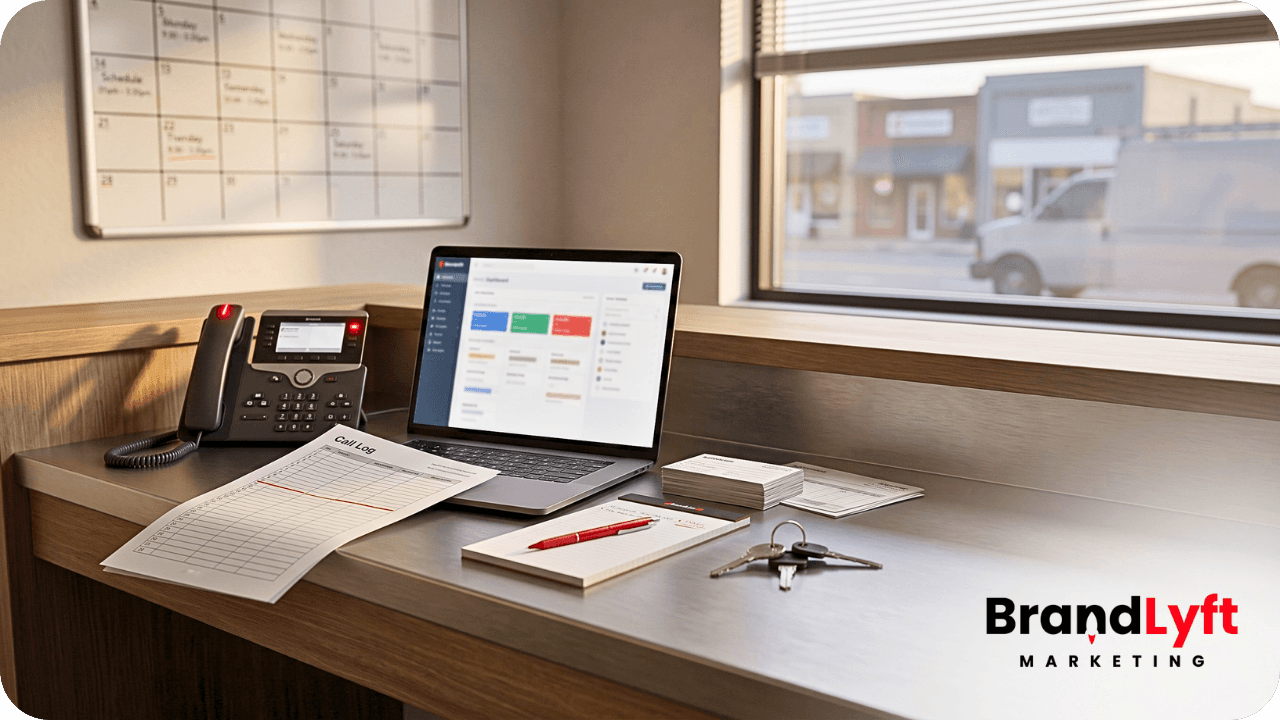

A GoHighLevel audit helps you find where a stalled account is actually breaking down, from lead capture and routing to workflows, pipelines, calendars, and follow-up. A lot of GoHighLevel accounts are not broken because the software is bad. They are broken because setup stopped halfway, automations were patched together over time, and nobody checked whether the whole thing actually works from lead to close.
That is what a real GoHighLevel audit is supposed to fix.
If you have a dusty, half-built GHL account, this is usually what happened. Somebody connected enough pieces to get the system live, but not enough to make it reliable. Forms exist, but the handoff is messy. Workflows exist, but nobody trusts them. The pipeline is technically there, but the team still works outside the system because the account never became the real operating system.
That is not a software problem. It is a systems problem. BrandLyft has already made this point in You Didn’t Buy a CRM, You Bought a Revenue System. Installing the tool is not the same as wiring the business. An audit is where you find out whether the account reflects the way the business actually sells, follows up, books, and closes.
What a GoHighLevel Audit Is Actually Supposed to Answer
A real audit is not a tour of the dashboard. It is not somebody opening random tabs and saying the account looks fine. A real GoHighLevel audit is supposed to answer a short list of operating questions.
- Is the account built around the real sales process?
- Are leads getting captured, routed, followed up, and tracked properly?
- Are automations firing at the right time?
- Are pipelines, calendars, forms, and integrations working together?
- Is the team actually using the system?
If the answer to even two of those questions is fuzzy, the account does not need another patch. It needs an audit.
The Signs You Need a GoHighLevel Audit Now
Most stalled accounts do not fail in dramatic ways. They leak performance quietly.
Leads still come in, but follow-up is inconsistent. Pipelines exist, but they do not reflect the real sales process. Automations are there, but nobody fully trusts them. Integrations are half-connected, reporting is muddy, and the business is paying for GHL while still doing most of the real work outside it.
That last one matters. If your team still lives in email threads, spreadsheets, call logs, Slack messages, and manual reminders while GoHighLevel sits in the background like an expensive storage bin, the account is not fully installed. It is half-adopted.
BrandLyft has already said the same thing in plainer terms: most small businesses do not need more tools, they need one system that captures leads, follows up fast, books appointments, and keeps moving without the staff becoming full-time software babysitters. That only happens when the account is wired correctly.
What a Real GoHighLevel Audit Checks
Lead Capture Points
The audit starts at the front door. Where are leads coming from? Website forms, landing pages, Facebook lead forms, missed calls, chat widgets, inbound webhooks, referral traffic, ad campaigns, and manual entry all matter.
The question is not just whether lead capture exists. The question is whether each entry point is still connected, tagged correctly, attributed correctly, and routed into the right workflow or assignment path.
Pipelines and Opportunity Stages
A lot of GHL pipelines look organized until you compare them to how the business actually sells. That is when the gaps show up.
Stages are often too generic, too bloated, or disconnected from the real buying journey. A real audit checks whether the pipeline reflects actual movement from inquiry to booking to close, who owns each stage, and what should happen automatically at each step.
Calendars and Routing Logic
If appointments are getting booked, the audit checks whether they are going to the right person, under the right conditions, with the right availability rules. If round-robin logic, availability windows, or staff assignment settings are wrong, the whole “it booked fine” story falls apart fast.
HighLevel’s own documentation breaks out round-robin setup and appointment distribution logic because calendar routing is not trivial once multiple users, services, or availability rules get involved. That is exactly why this needs to be part of the audit, not left to guesswork. See HighLevel’s round-robin calendar guide.
Workflows and Automation Triggers
This is where most half-built accounts get messy.
A real GoHighLevel audit checks which workflows are active, what triggers them, what conditions they use, what actions they fire, and whether those actions still make sense. It also checks for duplicate workflows, outdated branches, dead-end automations, or timing logic that creates a messy customer experience.
There are enough moving parts here that “it should work” is not a real test. HighLevel’s workflow docs are useful, but they do not tell you whether your specific account still makes operational sense.
If the account is technically active but still weak on follow-up, BrandLyft’s piece on marketing automations is a clean next read for what the system should actually be doing.
Forms, Surveys, and Attribution
An audit checks whether forms and surveys are still doing what they were built to do. Are submissions landing in the right place? Are fields mapped correctly? Is source tracking clean enough to show where leads came from, or is everything collapsing into guesswork?
If attribution is weak, the business starts optimizing based on vibes instead of evidence.
Email, SMS, and Deliverability Basics
This is one of the easiest places to get false confidence.
Messages may technically send while performance is still weak because of bad timing, thin segmentation, poor sender setup, inconsistent reply handling, or domain issues. A real audit checks whether messaging is firing on time, whether it is going from the right channel, and whether deliverability basics are even in place.
If this is where your account feels shaky, pair the audit with Is GHL Really All That Good for Small Businesses? (Short answer: Yes – if you wire it right.)
Integrations and Handoff Points
Half-connected integrations are one of the biggest reasons accounts stall.
The audit checks whether outside tools are still passing data cleanly into GHL, whether fields are mapped correctly, whether webhook or Zap-based handoffs still work, and whether the team knows what is supposed to happen after data moves from one system to another.
If the account depends on industry-specific software, API logic, or custom handoff behavior, that is where custom development may need to enter the picture instead of another layer of manual patchwork.
Speed-to-Lead and Response Gaps
A lot of accounts look mostly set up while still losing leads in the first ten minutes.
An audit checks how fast the account responds after a lead comes in, what message goes first, whether the right user gets notified, and where delay or silence creeps in. If response time is inconsistent, the system is not helping enough where it matters most.
Team Usage and Admin Cleanup
The final check is not technical. It is behavioral.
Is the team actually using the system, or are they working around it? Are there old users, duplicate assets, messy naming conventions, outdated workflows, forgotten calendars, and random custom fields that nobody understands anymore?
A lot of GHL problems are really admin hygiene problems that piled up long enough to become trust problems.
What Most Businesses Find During a GoHighLevel Audit
They usually find more than one issue, but the patterns repeat.
Duplicate workflows. Dead-end automations. Disconnected forms. Poor stage logic. Weak follow-up timing. No clear ownership after lead capture. Leads assigned to the wrong person. Notifications nobody sees. Calendar logic that looks fine until more than one rep needs it at once.
And usually, underneath all of it, one bigger issue shows up: nobody ever made one clean operating decision about how the account was supposed to run.
DIY GoHighLevel Audit vs Getting Expert Help
Some businesses can absolutely self-check their account.
If the setup is simple, the team is small, the workflows are limited, and someone internally understands the logic well enough to test it from lead to close, a DIY audit can work. That is especially true when the goal is cleanup, not a bigger rebuild.
But if leads are already slipping, trust in the system is low, reporting is muddy, and the team keeps saying things like “we think that workflow still runs” or “we just do that part manually,” you are probably past the point where DIY patching is cheap.
That is usually when expert help starts making more sense – not because the software is too advanced, but because ongoing uncertainty is already costing you response time, missed leads, and internal drag.
What to Do After a GoHighLevel Audit
Do not turn the audit into another document that sits untouched for six weeks.
Use it to clean up what is broken, simplify what got overbuilt, rebuild the parts nobody trusts, and create one clear implementation plan in order of importance.
The goal is not to create a prettier account. The goal is to create one reliable system the business can actually use.
Use This Before Booking Help
Before you jump straight into a service call, use the GHL Implementation Scorecard as the self-assessment step.
If the scorecard shows the account is mostly clean and the problems are minor, fix them internally and move. If it shows routing gaps, trust issues, workflow confusion, or adoption problems across the system, that is usually your signal that the account needs a real audit and a real rebuild plan.
What to Do Next
Use the scorecard first. Then, if it shows real setup issues, book a discovery call and get clear on what is broken, what is slowing the team down, and what needs to be rebuilt first.
A GoHighLevel audit gives you one clear order of operations before another random patch makes the account harder to trust.
Because most stalled GHL accounts do not need more random tweaks. They need someone to trace the system from lead to close, find where it stops making sense, and fix the parts the business already stopped trusting.