An exercise equipment SEO agency should help buyers find the right products before they ever talk to sales. If your fitness equipment website has weak category pages, thin product pages, unclear dealer pages, missing local visibility, or a slow quote path, search traffic may never turn into real buyers.
That matters for fitness equipment sellers, suppliers, dealers, commercial gym brands, wellness equipment companies, and related B2B or B2C sellers.
People do not always search for your brand first.
They search for a product type.
They search by use case.
They compare brands, specs, price ranges, delivery options, installation needs, warranties, local dealers, and commercial gym fit.
If your site does not answer those searches clearly, buyers may find another seller before they understand what you offer.
Why an Exercise Equipment SEO Agency Has to Think Beyond Rankings
An exercise equipment SEO agency should not treat every fitness equipment website like a simple brochure site.
Fitness equipment buyers often search with a specific need already in mind. A gym owner may look for commercial treadmills. A physical therapy clinic may compare rehab equipment. A hotel buyer may search for compact gym packages. A home user may want a folding treadmill, dumbbell set, rowing machine, squat rack, or replacement part.
Each search carries a different buyer intent.
Some visitors want product details.
Some want a category page that narrows the options.
Some want a quote.
Some want a local dealer.
Others need delivery, installation, financing, warranty, or service information before they feel ready to contact anyone.
SEO has to support that path.
BrandLyft’s SEO Services fit this kind of work when the site needs better organic structure, stronger on-page signals, useful content, and cleaner search paths for real buyers.
How Fitness Equipment Buyers Actually Search
Fitness equipment buyers rarely move in a straight line.
A commercial buyer may begin with a broad search like “commercial gym equipment supplier.” Then they narrow the search to cardio equipment, strength machines, functional training racks, studio flooring, recovery tools, or specific equipment packages.
A local buyer may search for “fitness equipment dealer near me,” “gym equipment showroom,” or “exercise equipment installation.”
A home buyer may search by product type, size, budget, space limit, or feature.
That means a fitness equipment website needs more than a homepage and a few product pages.
It needs a structure that matches how buyers look for equipment.
A strong site usually needs:
- Clean product category pages
- Useful product pages
- Clear comparison and buying-guide content
- Dealer, showroom, or local availability pages when relevant
- Quote, consultation, or checkout paths that feel easy to follow
- Tracking that shows which pages create real sales conversations
Without that structure, SEO traffic can look active while buyers still drift away.
What an Exercise Equipment SEO Agency Should Fix First
An exercise equipment SEO agency should start by checking the pages that carry buyer intent.
The homepage matters, but it rarely does the whole job.
For equipment brands and dealers, the money usually sits deeper in the site: product categories, individual products, commercial use cases, local dealer pages, and quote paths.
If those pages are thin, duplicated, hard to navigate, or missing useful detail, buyers may not trust the site enough to move forward.
Category Pages Need to Do More Than List Products
Category pages often carry strong search intent.
A buyer searching for treadmills, strength equipment, recovery tools, studio bikes, weight benches, racks, or functional training equipment may land on a category page before a product page.
That page should help the buyer narrow the choice.
Weak category pages usually show a grid and stop there.
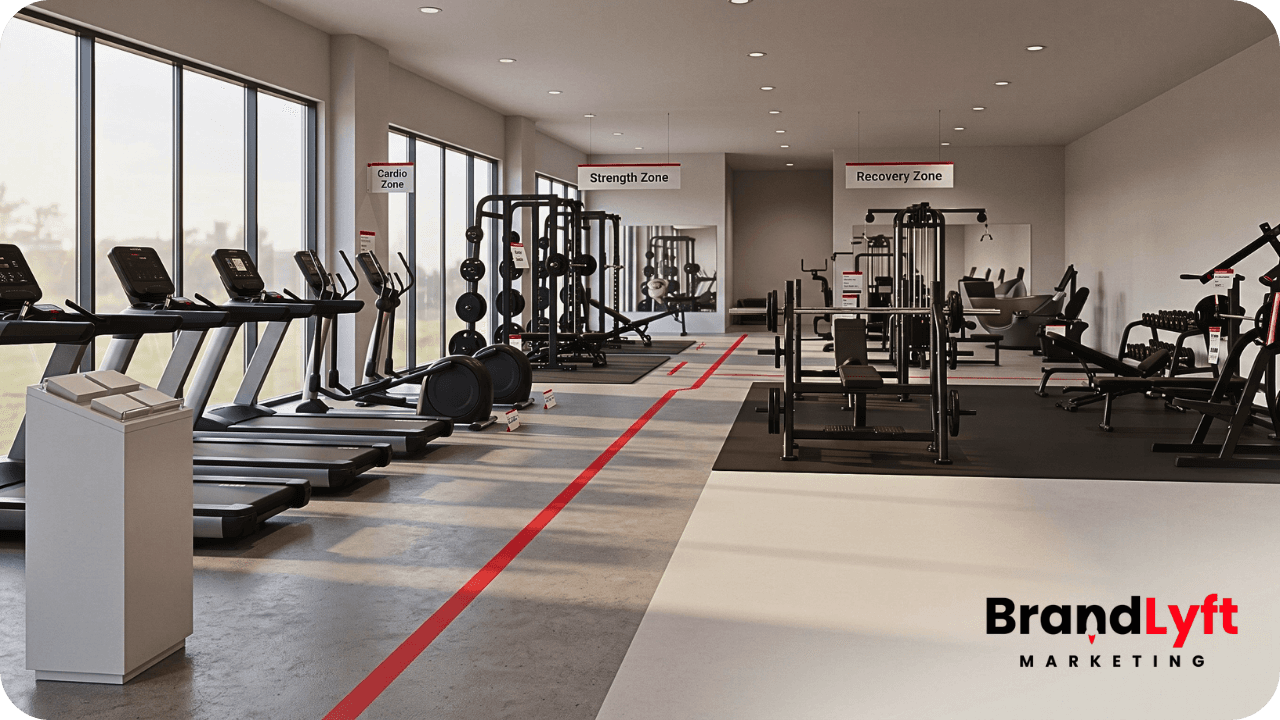
Better category pages explain what belongs in the category, who the equipment fits, what buyers should compare, and how to move toward a quote or purchase.
For commercial buyers, the category page may also need to mention installation, facility type, volume needs, durability, warranty, service, and planning support.
BrandLyft’s E-commerce Development work connects here because product visibility does not live only in copy. It also depends on store structure, product data, inventory logic, page speed, and the way the site moves buyers toward action.
Product Pages Need Buyer-Ready Detail
A product page should answer the buyer’s practical questions before they leave the page.
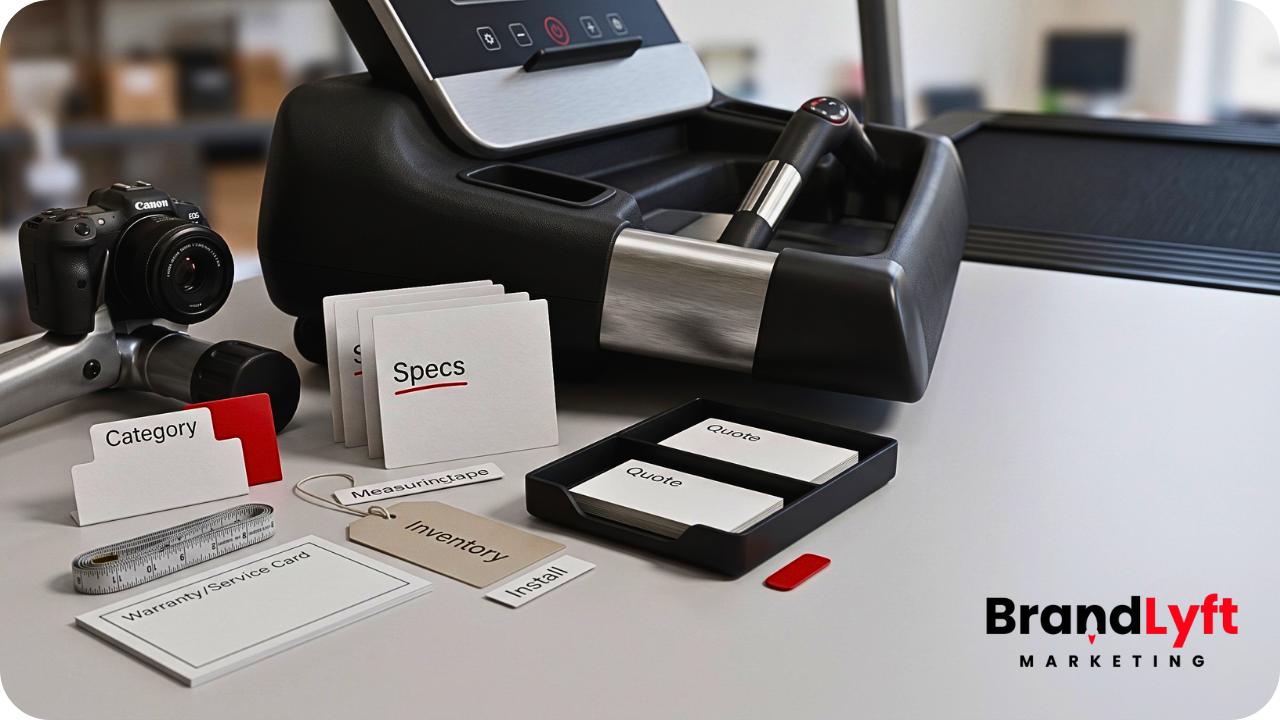
That may include product dimensions, use case, target user, commercial or home fit, installation needs, delivery options, service expectations, warranty details, accessories, related products, and quote or checkout next step.
Google’s product structured data documentation explains how product markup can help potential buyers see product information in Search when the page meets the requirements.
That does not mean markup alone creates sales.
The visible page still has to help the buyer decide.
Dealer and Local Pages Need Real Purpose
Some fitness equipment brands sell directly. Others rely on local dealers, showrooms, installers, service partners, or regional sales teams.
If local visibility matters, the site needs pages that explain where buyers can get help, what each location or dealer supports, and how the buyer should contact the right person.
Thin dealer pages can create the same problem as thin city pages.
They exist, but they do not help the buyer.
Google’s LocalBusiness structured data documentation explains how local business details can help search systems understand business information such as business hours and departments. For fitness equipment dealers or showrooms, the larger job is still the page itself: make the local buying path clear.
Conversion Paths Need to Match the Sale
Fitness equipment sales can be simple or complex.
A single home product may need a checkout path.
A commercial gym package may need a quote request, layout conversation, equipment plan, financing discussion, or delivery call.
A service or installation request may need location details, equipment type, timeline, and contact information.
If the website gives every buyer the same contact form, the team may lose useful context before the sales conversation starts.
BrandLyft’s Web Design service matters here because the site has to guide search visitors toward the right next step, not only look polished.
Product Search Check
Before More Buyers Hit the Site, Check the Pages They Actually Land On
If product pages, category pages, dealer pages, quote forms, and tracking already feel thin or unclear, more traffic may only expose the same sales leak faster.
Need the search path reviewed first? Review SEO Services or book the discovery call.
Why Website Structure Matters for Fitness Equipment SEO
Website structure tells buyers and search engines how your equipment catalog fits together.
If the structure is messy, important pages may compete with each other.
A treadmill category page, commercial treadmill page, home treadmill page, used treadmill page, and treadmill product page should not all try to do the same job.
Each page should have a clear role.
The category page helps buyers narrow the type.
The product page sells the specific item.
The commercial page speaks to gyms, studios, hotels, schools, or clinics.
The dealer page helps local buyers find help near them.
The buying guide answers questions before the buyer is ready to request a quote.
When every page has a job, SEO gets easier to understand.
When every page says the same thing, the site becomes harder to trust.
What Product and Category Pages Should Include
Fitness equipment pages should not make buyers guess.
For product pages, useful content may include:
- Product name and clear category
- Commercial, home, wellness, rehab, or studio use case
- Dimensions, specs, power needs, and space requirements
- Delivery, installation, service, and warranty details when relevant
- Related products or accessories
- Quote, checkout, dealer, or consultation path
For category pages, useful content may include:
- How to choose within the category
- Who the equipment fits
- Commercial vs home-use differences
- Common buyer questions
- Featured products or subcategories
- Clear next step for quote, showroom, dealer, or checkout
Google’s product snippet documentation covers product information that may appear in richer search results, such as ratings, price, and availability, when the page qualifies and the markup follows the rules.
That makes product data cleaner for search.
It still has to match visible, useful page content.
Product Data Can Make or Break Search Visibility
Product data matters because fitness equipment catalogs often contain many similar products.
A buyer may compare two ellipticals, five benches, three squat racks, or several commercial cardio packages. Search systems and shopping surfaces need clean data to understand what each item is, who it fits, and how it differs from nearby products.
Google Merchant Center’s product data specification explains that Google uses product data to match products to the right queries. Bad, missing, or inaccurate product data can cause display issues or limit how products appear.
For fitness equipment sellers, that means product names, descriptions, images, availability, pricing, identifiers, categories, and feed data should not live as an afterthought.
The product feed, product page, and category structure should tell the same story.
If they do not, buyers may see confusing results or land on pages that do not match their search.
Local and Dealer Visibility Need a Different SEO Path
Some exercise equipment brands need national ecommerce visibility.
Others need local dealer visibility.
Many need both.
A buyer may want to search online, visit a showroom, talk to a dealer, check local inventory, or ask about delivery and installation in their area.
That kind of search path needs more than product descriptions.
Dealer pages should explain what the local buyer can do next. Can they visit a showroom? Request a quote? Check availability? Schedule installation? Talk to a regional rep? Get service for existing equipment?
Google Merchant Center’s local inventory documentation explains how local inventory data can tell Google which stores have certain products. For dealers and showroom-based sellers, that kind of inventory clarity can matter when buyers search with local intent.
BrandLyft’s Specialty Retail page fits this part of the conversation because product-driven businesses often need SEO, local visibility, reputation, and conversion paths working together.
Content Should Support Buyers Before They Ask for a Quote
Not every buyer is ready to contact sales.
Some are still comparing product types.
Some are deciding between commercial and home equipment.
Some need to understand space planning.
Some want to know which equipment fits a hotel gym, apartment gym, school weight room, boutique studio, physical therapy clinic, or corporate wellness room.
Good SEO content helps buyers move from research to decision.
That may include buying guides, comparison pages, use-case pages, installation guides, maintenance content, product selection pages, and dealer support content.
The goal is not to publish random blog posts.
The goal is to answer the questions buyers ask before they raise their hand.
Conversion Still Matters After the Buyer Finds the Page
Search visibility is not the finish line.
A buyer still needs to act.
That action may be checkout, quote request, dealer contact, showroom visit, call, financing inquiry, service request, or product consultation.
If the call to action does not match the sale, conversion drops.
A commercial buyer may not click “Add to Cart” on a full gym package. They may need “Request a Commercial Quote” or “Talk to a Gym Equipment Planner.”
A local buyer may need “Find a Dealer” or “Check Local Availability.”
A home buyer may need clear product specs, shipping details, and a simple checkout path.
BrandLyft’s Revenue System Build connects to this problem because the website should not only capture interest. It should route buyer interest into a path the team can follow, track, and close.
Paid Ads and SEO Should Not Fight Each Other
Fitness equipment brands often run paid campaigns while trying to grow organic search.
That can work well when the pages are built properly.
A strong product category page can support SEO, paid search, Shopping campaigns, retargeting, and sales follow-up. A weak page forces each channel to compensate for the same missing content.
If paid traffic keeps landing on thin product pages, ads become more expensive to judge.
If SEO traffic lands on pages with unclear next steps, organic growth may not create sales conversations.
If tracking stops at form submissions, the team may not know which pages create quotes, dealer calls, or purchases.
BrandLyft’s Paid Ads Management becomes stronger when the landing pages, product data, tracking, and follow-up path already support buyer intent.
What to Ask Before Hiring an Exercise Equipment SEO Agency
Before hiring an exercise equipment SEO agency, ask practical questions.
Will they review category pages before writing blog posts?
Will they check product page detail, not just keyword use?
Will they look at product data, feeds, and structured data?
Will they review local or dealer visibility if your buyers search by area?
Will they connect SEO traffic to quote requests, calls, dealer inquiries, showroom visits, and sales follow-up?
Will they help decide which pages should rank and which pages should support?
Will they check conversion paths before increasing traffic?
If the answer is no, the agency may treat your equipment catalog like ordinary content.
That is not enough for a product-led business.
How BrandLyft Fits Fitness Equipment SEO
BrandLyft is a fit when a fitness equipment company needs more than scattered SEO work.
The site may need a cleaner category structure.
Product pages may need stronger buyer information.
Dealer or local pages may need a clearer role.
Tracking may need to show which pages create quote requests, calls, or booked sales conversations.
The follow-up path may need to connect website interest to CRM, email, SMS, tasks, and sales ownership.
BrandLyft’s Proof page shows how the company talks about growth through lead response, attribution, reputation, and systems behind the marketing. That matters for product-led companies too, because visibility alone does not close the sale.
For a fitness equipment seller, SEO should help the right buyer find the right page, understand the right product path, and take the right next step.
That is the real job.
Before More Traffic, Fix the Buyer Path
An exercise equipment SEO agency should help fitness equipment brands get found by buyers, but the work should not stop at rankings.
The site has to support product discovery, category decisions, local or dealer visibility, product data, conversion, and follow-up.
If the buyer lands on a thin category page, confusing product page, weak dealer page, or vague quote form, search traffic may not turn into real demand.
Fix the buyer path first.
Then build the search program around it.
What This Means
If Buyers Can Find the Product But Still Do Not Act, the Page Path Needs Review
Search visibility only helps when product pages, category pages, dealer pages, quote forms, and follow-up paths make the next step clear. Start by finding where the buyer path leaks.
Need the organic path reviewed too? Review SEO Services or book the discovery call.